
Cleaning an epoxy garage floor requires pH-neutral cleaners, soft-bristle tools, and a seasonal routine that addresses road salt, oil drips, and moisture before they cause permanent damage. Cleveland Concrete Coatings installs and maintains residential garage floor coatings across Greater Cleveland and Northeast Ohio.
Spring in Greater Cleveland means one thing for your garage floor: five months of road salt, sand, calcium chloride, and snowmelt residue that’s been tracked in on tires and boots since November. Left sitting through the warmer months, those deposits etch into coated surfaces and dull the finish over time. A proper spring cleaning removes that accumulation before it does real damage, and a consistent routine during the rest of the year keeps the floor performing the way it should.
Step 1: Clear the Floor and Remove Loose Debris

Start by pulling vehicles, storage bins, and equipment off the floor. Sweep the entire surface with a soft-bristle push broom or use a leaf blower to clear dust, sand, and loose grit. This step matters more than it sounds. Grit left on the floor during mopping acts as an abrasive under the mop head, scratching the topcoat with each pass.
Pay attention to corners, along walls, and under shelving where debris collects through winter. In Cleveland garages, road salt granules tend to accumulate along the edges where tires don’t track.
Step 2: Mix and Apply a pH-Neutral Cleaning Solution
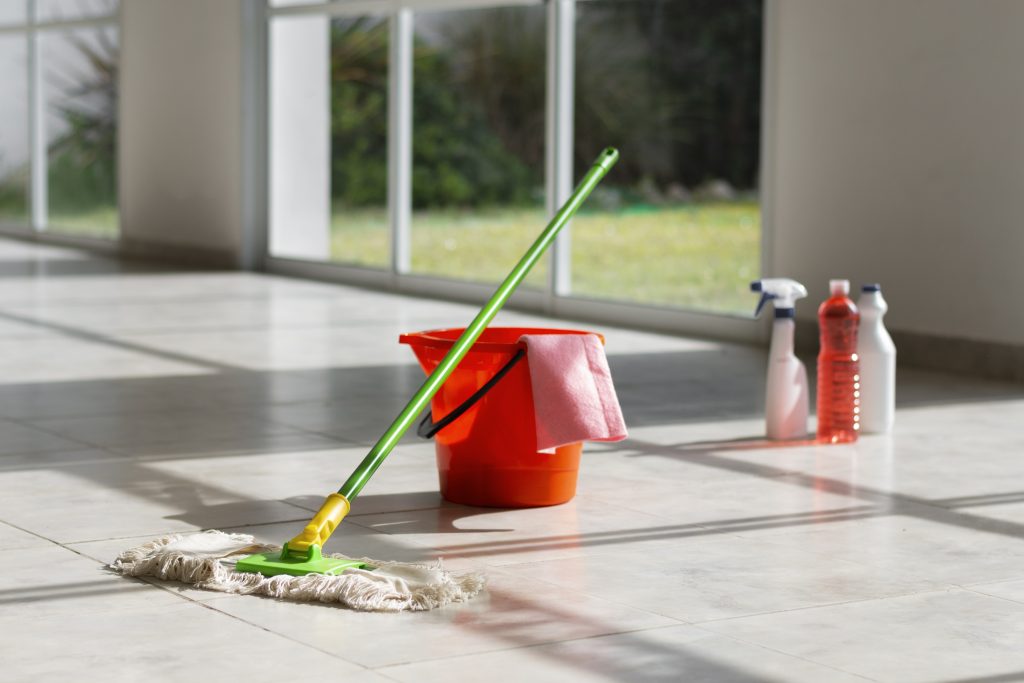
Use a pH-neutral floor cleaner diluted per the manufacturer’s instructions. Avoid acidic cleaners, vinegar, citrus-based degreasers, and anything with ammonia. These chemicals degrade the polyaspartic topcoat over time, dulling the gloss and weakening the chemical bond.
A few squirts of dish soap in a bucket of warm water works in a pinch, but a dedicated concrete floor cleaner designed for coated surfaces produces better results without leaving a film. Apply the solution with a soft mop or microfiber pad and work in sections.
Step 3: Scrub Problem Areas and Treat Stains
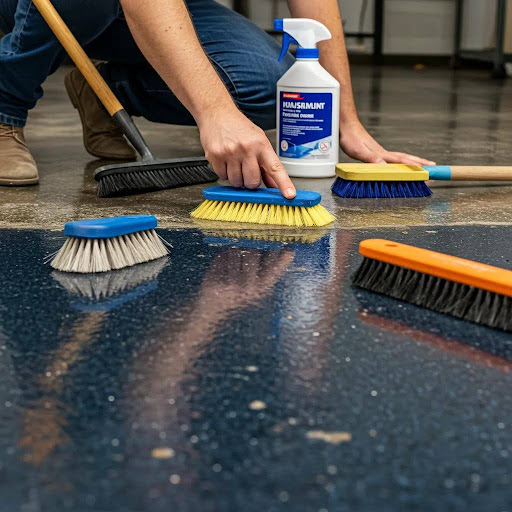
Oil drips, tire marks, and road salt stains need targeted attention. For oil, apply a paste of baking soda and water to the stain, let it sit for 15 to 20 minutes, then scrub with a nylon brush. For tire marks, a soft scrub pad with the pH-neutral cleaner usually lifts them without damaging the topcoat.
Road salt stains respond to warm water and a careful approach that addresses the mineral residue rather than just pushing it around. Homeowners across Painesville, Mentor, and the surrounding lakefront communities deal with heavier salt exposure due to proximity to Lake Erie. Multiple light passes work better than aggressive scrubbing.
Step 4: Rinse Thoroughly and Let Dry
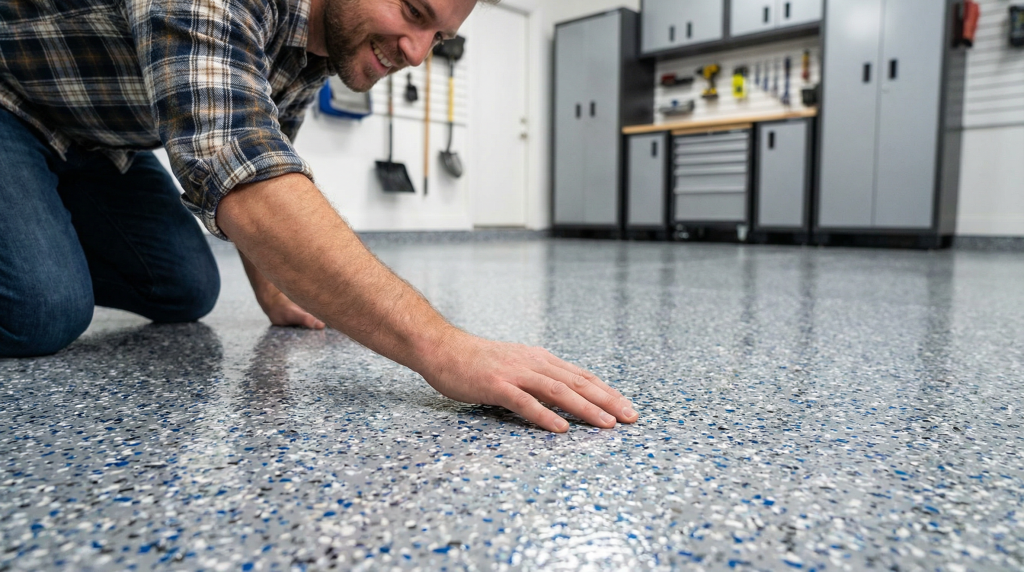
Rinse the entire floor with clean water after mopping. A garden hose with a spray nozzle works, or a clean mop with plain water for enclosed garages. The goal is to remove all cleaning solution residue, which can leave a haze on the surface if it dries in place.
Let the floor air dry with the garage door open. In Cleveland’s humid summer months, a floor fan speeds this up and prevents moisture from sitting on the surface.
Seasonal Maintenance Schedule for Cleveland Garages
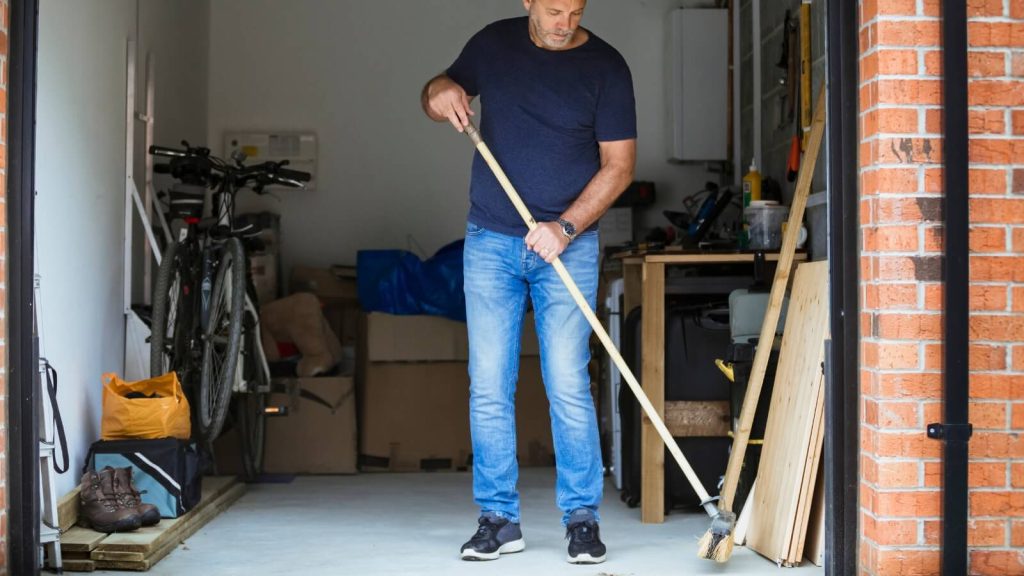
Different seasons put different stress on your garage floor, and a seasonal schedule prevents the small stuff from becoming expensive problems.
Spring is the deep-clean window. Remove winter salt and chemical residue, inspect for any chips or cracks from impact or freeze-thaw stress, and address any stains that accumulated over the cold months.
Summer requires lighter maintenance: sweep weekly, mop monthly, and keep the floor dry. If your garage sees regular vehicle traffic, tire marks build up faster in warm weather when rubber softens.
Fall is prep season. Clean thoroughly before winter returns, and consider applying a sacrificial wax coat if your installer recommends one for your system type.
Winter is about damage prevention. Place absorbent mats under vehicles to catch snowmelt and salt drip. Sweep salt granules weekly before they sit long enough to etch. If you notice coating problems like bubbling or peeling, address them before winter moisture compounds the issue.
When Maintenance Stops Being Enough
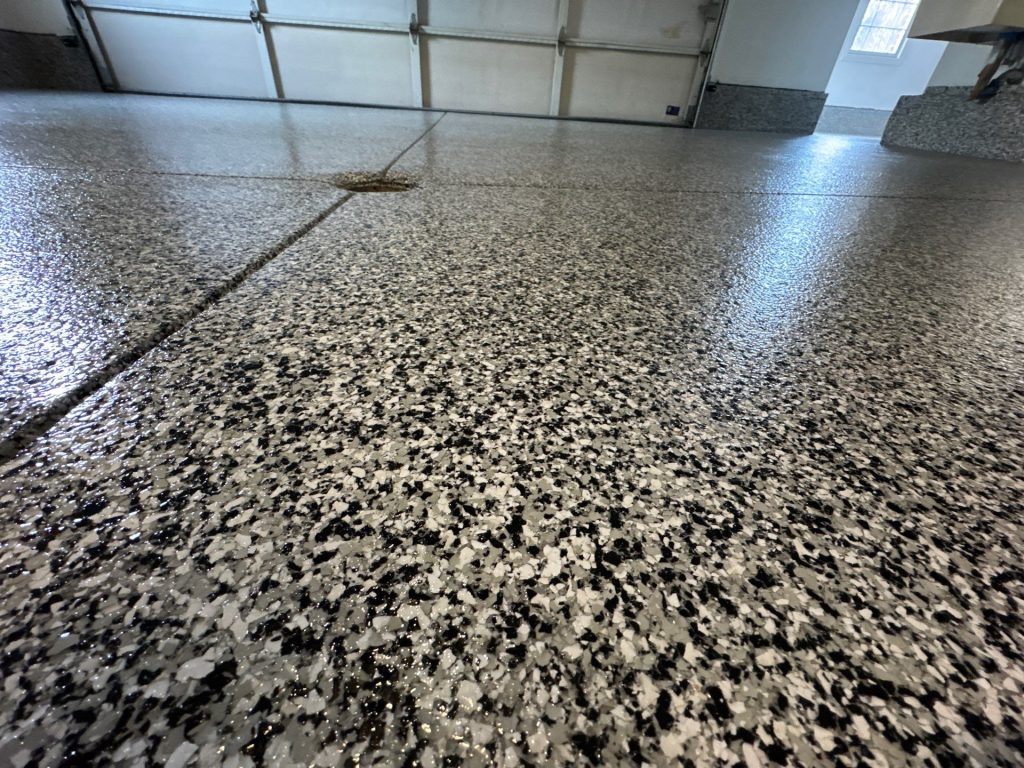
A well-maintained polyurea polyaspartic floor can perform for anywhere from 5 to 20 or more years with proper care, but every coating has a service life. If the floor is consistently losing gloss despite cleaning, if stains are penetrating rather than sitting on the surface, or if chips and peeling are spreading rather than staying isolated, the coating has reached its end stage. For a detailed look at what to expect from your floor’s lifespan, our epoxy floor lifespan guide covers the factors that determine how long different systems hold up in Northeast Ohio conditions.
At that point, recoating is the right move. Cleveland Concrete Coatings can assess whether a surface refresh or a full recoat is the better path during a free on-site evaluation.
Frequently Asked Questions
How often should I clean my epoxy garage floor in Cleveland?
Sweep weekly to prevent grit buildup, mop monthly with a pH-neutral cleaner, and do a full deep clean in spring after winter salt season ends. Garages with daily vehicle traffic in Northeast Ohio typically need more frequent attention during winter months when road salt and calcium chloride are tracked in consistently.
Can I use a pressure washer on my coated garage floor?
Yes, but most manufacturers recommend staying below 1,500 PSI and using a wide fan tip. Higher pressure can damage the topcoat, especially at edges and seams. For most routine cleaning, a garden hose and mop are sufficient and safer for the coating surface.
What should I never use to clean an epoxy or polyaspartic floor?
Avoid acidic cleaners, vinegar, citrus-based products, ammonia, steel wool, and abrasive scrub pads. These damage the topcoat by dulling the gloss, weakening chemical resistance, or physically scratching the surface. Stick to pH-neutral cleaners and soft-bristle or microfiber tools.
Keep Your Investment Looking the Way It Did on Day One
A coated garage floor is one of the lowest-maintenance surfaces in your home when you follow the right routine. The steps are simple, the tools are basic, and the payoff is a floor that stays sharp through Cleveland winters and everything that comes with them. If your floor needs more than a mop can fix, request a free quote from Cleveland Concrete Coatings and we’ll take a look.

Benjamin & Andrew Smola are the owners of Cleveland Concrete Coatings, a concrete coating company based in Cleveland. With a hands-on approach and local expertise, Benjamin, Andrew, and their team are dedicated to delivering durable, high-quality flooring solutions for homes and businesses throughout the area.