
How long epoxy flooring lasts depends on the product installed, the quality of surface preparation, and the environment. Professional epoxy in a residential garage generally lasts somewhere in the 5 to 10-year range. DIY kits tend to show failure well before that, often within a few years. Cleveland Concrete Coatings installs polyurea polyaspartic systems, rated to last 2 to 3 times longer than epoxy.
Most homeowners are surprised when the “10-year epoxy” starts showing failure at year three. That claim isn’t false. It simply refers to best-case conditions: perfect preparation, a climate-controlled space, no vehicle traffic, no chemical exposure. When you compare epoxy versus polyurea, the gap becomes clearer: the advertised lifespan is a ceiling, and a working garage in Northeast Ohio sits well below it. We explain what actually drives that gap below.
What Actually Determines How Long Epoxy Lasts
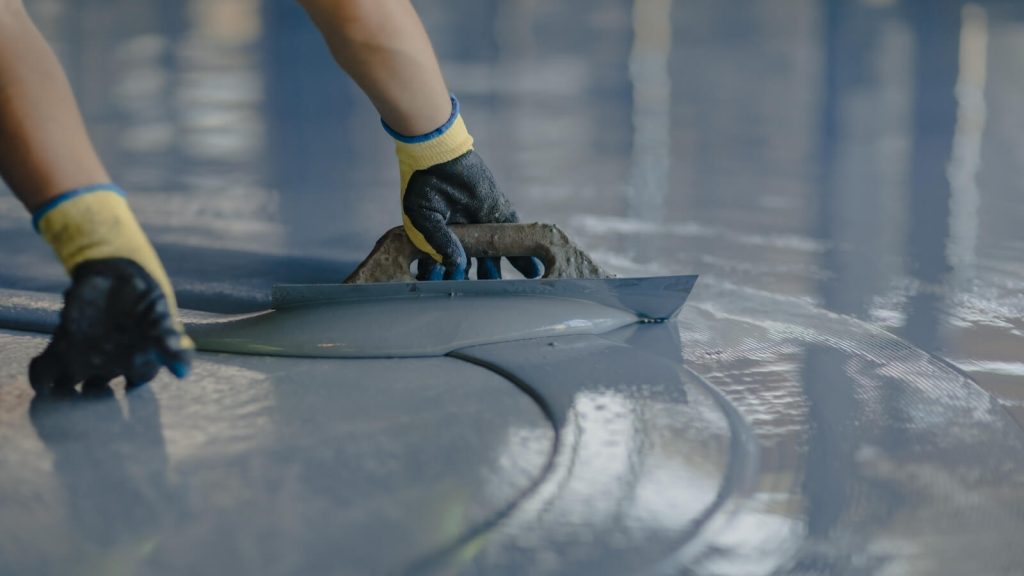
Three variables control epoxy’s real-world lifespan more than any product specifications:
Surface Preparation
Epoxy bonds mechanically, requiring diamond grinding to open the concrete pores and create a surface profile the coating can grip. Acid etching, standard for DIY kits, creates a shallower bond. Diamond-ground installations routinely outlast acid-etched ones by several years under identical conditions.
Moisture Vapor Transmission
Concrete slabs transmit groundwater vapor upward constantly, and epoxy doesn’t handle that pressure. Moisture accumulates beneath the coating and lifts it into bubbles, eventually peeling in sections. Ohio’s humid shoulder seasons accelerate this in ways dry-climate product testing doesn’t capture.
Coating Thickness
Consumer kits are typically 3 to 5 mils (thousandths of an inch) thick. Professional systems are at 10 mils or more. That difference translates directly to years of performance under vehicle traffic and thermal cycling.
Why Epoxy’s Lifespan Is Shorter in Northeast Ohio
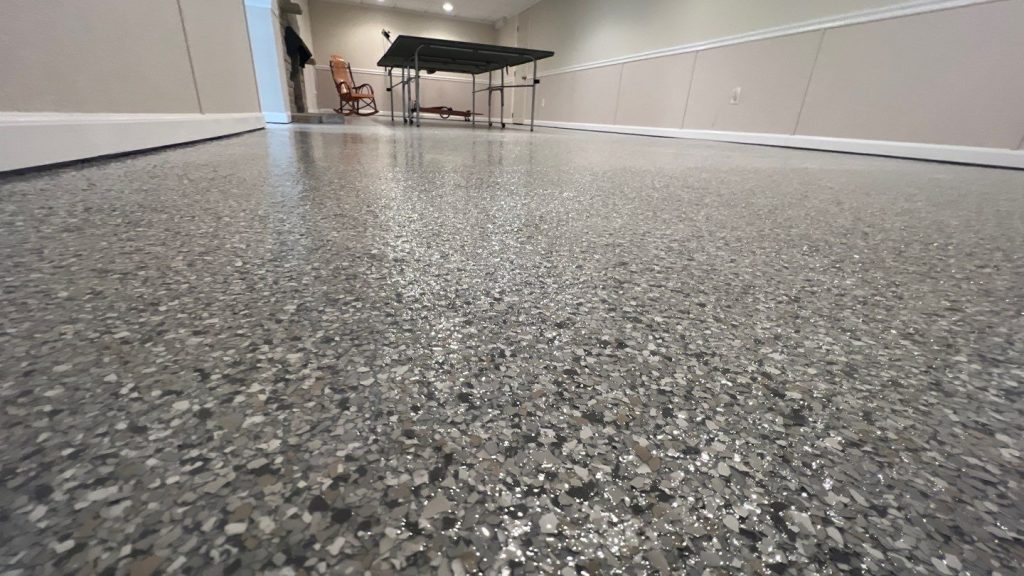
Cleveland winters exploit every weakness of epoxy floors. Here are three of the most common reasons for epoxy floor failure we see in Northeast Ohio garages:
Freeze-Thaw Cycles
Northeast Ohio experiences dozens of freeze-thaw cycles each winter. Epoxy is rigid. It resists concrete’s expansion and contraction rather than accommodating it. That repeated stress accumulates at the bond line and causes lifting at edges and seams, typically becoming visible by the second or third winter.
Road Salt
Sodium chloride tracked in from driveways in Painesville and communities along Lake Erie degrades standard epoxy adhesion over time and carries additional moisture into the surface. Polyurea handles salt and freeze-thaw stress significantly better because the material is flexible, moving with the slab rather than against it.
Attached Garages
The temperature difference between a heated home and an unheated slab drives humidity through the concrete more aggressively than a freestanding structure, cycling repeatedly throughout a Cleveland winter.
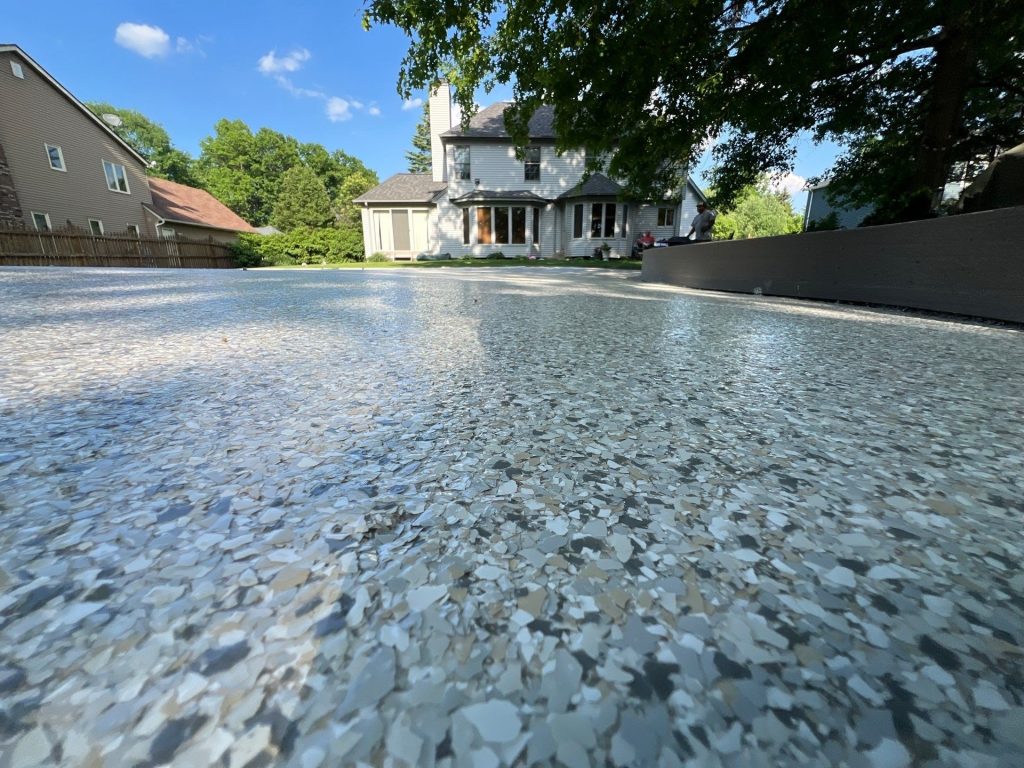
What a 15-Year Floor Actually Looks Like
Frequently Asked Questions
Does epoxy flooring last longer indoors than in a garage?
Yes, epoxy lasts significantly longer in climate-controlled indoor spaces. Garages simultaneously subject coatings to vehicle traffic, road salt, hot tires, moisture vapor, and freeze-thaw cycling. In a heated basement with foot traffic only, professional epoxy can realistically reach 10 years. In a working Ohio garage, the same product typically fails well before that.
How do you know when an epoxy floor needs to be replaced?
Peeling, bubbling, and flaking are the most visible signs. Yellowing indicates UV degradation. A sticky or tacky surface texture means the top layer has broken down from hot tire contact. At that point, the floor needs to be ground down and recoated. Patching over compromised adhesion rarely holds.
Can polyurea polyaspartic be installed over old epoxy?
No, Cleveland Concrete Coatings does not apply new coatings over existing ones. Any previous coating must be fully removed by diamond grinding the floor before installation begins. Direct concrete-to-polyurea contact is what produces the long-term adhesion the system is rated for. Skipping that step produces the same failures as the coating being replaced.
The Investment That Actually Pays Off
For Cleveland homeowners, the choice comes down to replacing a cheaper coating every few years or installing one system built for Northeast Ohio’s freeze-thaw cycles and road salt—and hardly thinking about the floor again. That calculation almost always favors the system built for the climate. Request a free quote and we’ll walk you through the numbers honestly.

Benjamin & Andrew Smola are the owners of Cleveland Concrete Coatings, a concrete coating company based in Cleveland. With a hands-on approach and local expertise, Benjamin, Andrew, and their team are dedicated to delivering durable, high-quality flooring solutions for homes and businesses throughout the area.