
Concrete coatings protect surfaces and beautify them. This guide compares epoxy and polyurea on durability, flexibility, UV resistance, cure time, and cost, helping you decide which is best for your project.
Understanding Concrete Coatings
Epoxy and polyurea are polymer-based systems. Epoxy is a hard, durable resin, great for indoor adhesion. Polyurea is more flexible and cures fast, often preferred for outdoor or quick-turnaround jobs.
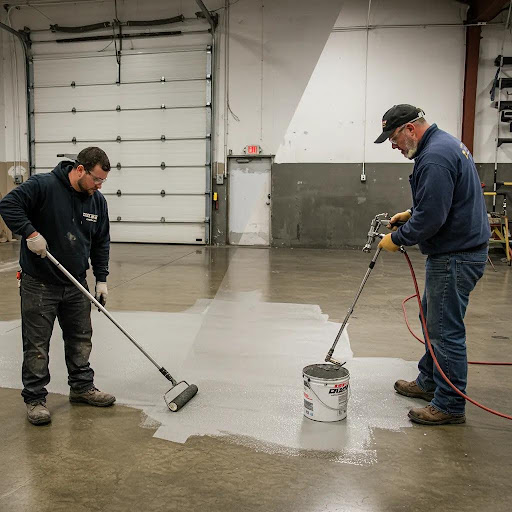
Epoxy: The Indoor Choice
Epoxy forms a tough, glossy film that adheres strongly to concrete, resisting abrasion and chemicals. Downsides: it can yellow in sunlight, crack on moving surfaces, and takes longer to cure. Ideal for indoor garage floors or showrooms where UV exposure is minimal.
- Pros: Hard, strong adhesion, good for indoor decorative floors.
- Cons: Yellows in the sun can crack with movement.
Polyurea: Flexible & Fast
Polyurea cures rapidly, creating a flexible, tough coating. It excels at bridging cracks, resisting temperature changes, and offers better UV stability (especially polyaspartic types). It’s pricier and needs expert installers. Best for industrial bays, fast commercial projects, or exterior surfaces needing robust, flexible protection.
- Pros: Cures fast (quick return to use), very flexible, resists cracks.
- Cons: Higher upfront cost, needs skilled pros.
Polyaspartic: A UV-Stable Polyurea Variant

Polyaspartic is a polyurea variant known for fast curing, flexibility, and excellent UV stability. It resists yellowing and gloss loss, making it a popular topcoat for outdoor decorative systems.
Durability & Flexibility: A Quick Look
Polyurea offers superior flexibility and abrasion resistance, bridging hairline cracks. Epoxy provides high hardness on stable surfaces, but is more brittle if the concrete moves.
- Epoxy: Hard, good abrasion (stable areas); low flexibility, brittle.
- Polyurea: Very high abrasion/impact; high flexibility, excellent crack bridging.
- Polyaspartic: High durability (UV-resistant); moderate to high flexibility.
For heavy traffic, polyurea often outperforms epoxy due to its resilience. Epoxy suits stable indoor areas. Polyurea’s flexibility handles concrete movement, preventing cracks common with rigid epoxy, especially in freeze-thaw climates.
UV Stability, Cure Time, & Cost
UV resistance, drying speed, and cost are crucial. Epoxy can yellow in sunlight without a UV-stable topcoat; polyurea and polyaspartic maintain color and gloss outdoors. Polyurea systems are tack-free in hours, while epoxies take 24–72+ hours. Polyurea costs more initially but often saves money long-term through reduced downtime and longer lifespan.
- Epoxy: Prone to yellowing; 24–72+ hour cure; lower initial cost.
- Polyurea: Good to excellent UV stability; hours to cure; higher initial, often lower lifecycle cost.
- Polyaspartic: High UV stability; rapid cure; premium initial, strong long-term aesthetic.
Outdoor Performance
Direct sunlight degrades many epoxy formulations. Polyurea and polyaspartic topcoats resist UV better, maintaining appearance for outdoor patios or parking areas.
Speed Matters
Polyurea and polyaspartic cure rapidly, allowing return to service in hours – ideal for projects needing minimal downtime. Epoxy cures slowly, requiring 1-3 days. Faster-cure materials demand experienced installers, but the time saved can justify higher upfront costs.
Cost Over Time
Polyurea generally costs more upfront. Epoxy is less expensive initially. However, polyurea’s durability and UV stability can reduce recoat frequency and downtime, leading to lower lifecycle costs. Choose epoxy for low-exposure, budget-limited indoor projects, and polyurea where heavy use, movement, or rapid return-to-service offer significant value.
How to Choose the Right Coating for Your Space
Match the coating to its use for best performance.
- Indoor, low UV, budget-friendly: Epoxy.
- Fast turnaround, high impact, outdoor UV: Polyurea or polyaspartic.
- Expected concrete movement/thermal cycling: Flexible polyurea.
Garage & Home
Epoxy offers great value for garages and homes: attractive finishes and chemical resistance at a lower cost. For faster cure, better UV resistance, or superior crack resistance, consider polyaspartic or polyurea topcoats. Proper surface prep and a skilled installer are always crucial.
Outdoor & Commercial
Outdoor patios, pool surrounds, and high-traffic commercial floors demand UV stability, slip resistance, and rapid return to service. Polyurea or polyaspartic systems are preferred. Epoxy is less suitable outdoors without a UV-stable topcoat. For heavy commercial use, polyurea’s resilience and quick cure minimize disruption.
Installation, Maintenance, & Lifespan
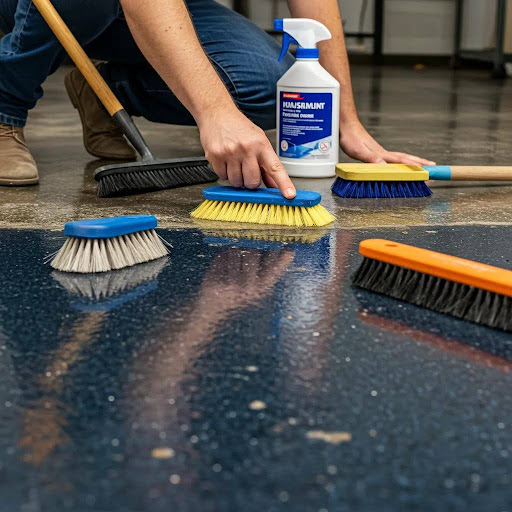
Good prep, regular care, and knowing how long it will last maximize your investment. Poor surface prep or ignored moisture are the top causes of coating failures.
Surface Preparation is Key
Mechanically profiling concrete, removing contaminants, and testing for moisture are vital. Proper prep prevents adhesion failures and extends service life.
Care & Longevity
Routine maintenance for both includes cleaning spills promptly. Epoxies commonly last 5–10 years in residential use; polyurea systems often exceed 10 years in commercial/industrial settings with proper care.
- Epoxy (indoor): Regular cleaning; recoat every 5–10 years.
- Polyurea / Polyaspartic: Minimal maintenance; often lasts beyond 10 years.
- All systems: Address spills quickly; monitor for delamination.
Safety & Environment
Consider VOCs, temperature, and worker protection. Many polyurea/polyaspartic systems have low VOCs and cure fast, but require experienced crews and PPE. Epoxy systems may off-gas and need longer ventilation. Always follow safety data sheets.
The Bottom Line
Epoxy is an economical, durable indoor choice, but less flexible and prone to UV yellowing. Polyurea and polyaspartic offer superior flexibility, UV stability, and rapid cure, ideal for outdoor, high-traffic, or time-sensitive projects, despite higher initial costs. Proper surface preparation and consistent maintenance are crucial for any concrete coating’s longevity.
Ready to Transform Your Concrete?
Contact our experts today to discuss your project and find the perfect coating solution for your needs. Get a Free Consultation now!