
Epoxy floors aren’t inherently slippery when dry, but they become a genuine slip hazard when wet, contaminated with oil, or finished with a high-gloss topcoat without a non-skid additive. Slip resistance in concrete coatings is measured using a coefficient of friction (COF) rating: a dry surface above 0.5 COF is generally considered safe for walking. Cleveland Concrete Coatings installs polyurea polyaspartic systems with built-in non-skid texture. The sections below explain exactly where the safety difference lies.
Here’s what most homeowners don’t realize when researching floor coatings: the finish that looks safest is often the one that performs worst when wet. High-gloss epoxy photographs beautifully, but that mirror finish is exactly what makes it slick the moment a wet tire rolls in or a water bottle tips over. The finish and the safety profile are not the same thing.
What Slip Resistance Actually Means

Slip resistance is a measurable property, not a marketing label. The coefficient of friction compares the force needed to slide an object across a surface against its weight: higher numbers mean more grip.
Industry safety standards, including ASTM and ADA-related guidelines, generally use a COF of 0.5 as the threshold for safe walking surfaces. A dry concrete slab generally falls in the 0.6 to 0.8 COF range. Standard high-gloss epoxy without a non-skid additive can drop well below the 0.5 threshold when wet, a range most safety guidelines classify as a hazard. Concrete coatings add both protection and safety when the right surface profile is chosen.
How Slip Resistance Is Built In—and What to Ask For
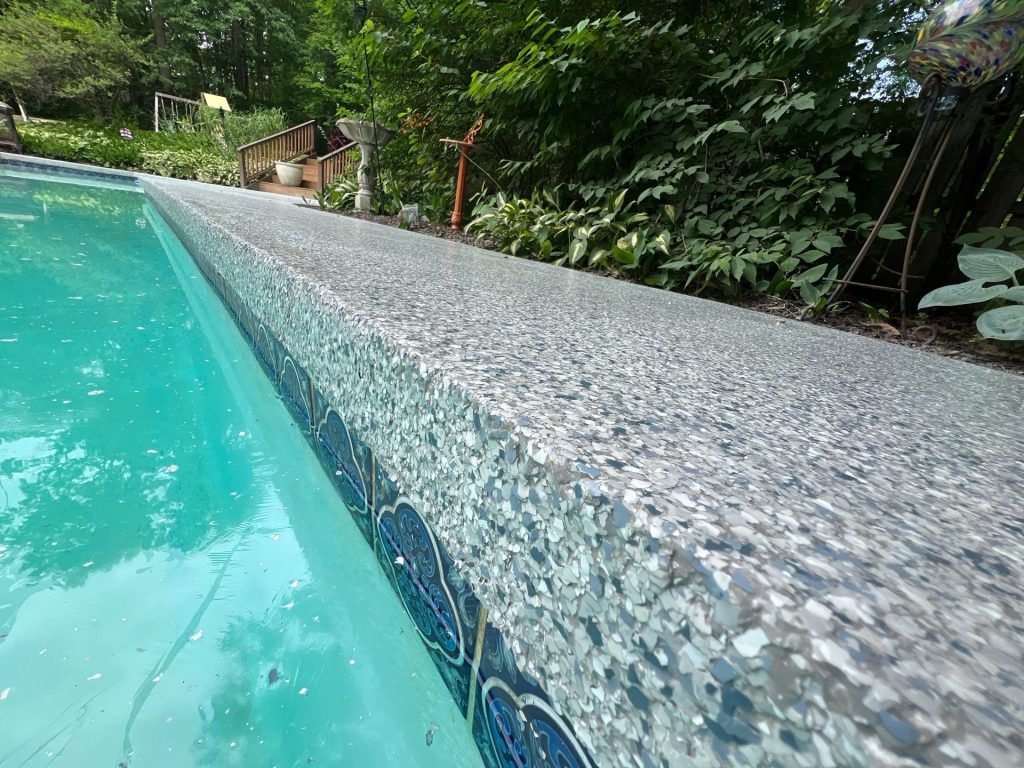
Two variables determine real-world slip resistance: the surface profile created by the coating and any texture additive in the topcoat. A smooth topcoat—even a chemically tough one—has low wet friction. A topcoat with aluminum oxide or polymer grit maintains grip under moisture.
Comparing top garage floor coatings shows this is a specification decision made at installation, not a product category difference. The common non-skid options include aluminum oxide (the most effective at all moisture levels), polymer sand (softer underfoot, preferred where people stand for long periods), and decorative vinyl flake (color chip systems that inherently add some texture). Non-skid additives are barely noticeable underfoot but present enough to matter when conditions change.
Where Epoxy Gets Slippery and Why

Cleveland Concrete Coatings’ residential concrete coating services include non-skid textures as a standard, not an upgrade. The polyaspartic topcoat incorporates aluminum oxide into the finish, maintaining safe friction under wet and contaminated conditions. The floor is visually attractive and easy to clean; the texture is fine enough to be barely noticeable, but present enough to prevent slipping.
For homeowners in lakefront communities where humidity is constant, asking about COF ratings and non-skid additives before any coating goes down is worth the conversation.
Frequently Asked Questions
Can you add a non-skid additive to an existing epoxy floor?
A non-skid additive can be applied through a compatible clear topcoat, but adhesion depends on the condition of the existing coating. If the floor is worn, delaminating, or has moisture issues, the topcoat won’t hold reliably. Cleveland Concrete Coatings recommends a full assessment before applying anything over an existing surface.
Are textured garage floor coatings harder to clean?
Lightly textured surfaces can be cleaned as easily as smooth ones for most messes. The aluminum oxide texture in polyurea polyaspartic systems is fine enough that dirt doesn’t pack into it. Standard sweeping and occasional neutral-cleaner mopping handles routine maintenance. Prompt oil cleanup is still needed on any surface.
Is an epoxy floor safe for dogs?
Smooth, high-gloss epoxy is slippery when wet for people and dogs alike. Dogs that can’t grip the surface properly strain their joints over time trying to keep their footing. Cleveland Concrete Coatings’ polyurea polyaspartic system provides enough texture for comfortable dog movement, and the zero-VOC formulation means no toxic fumes during or after installation.
Safety Is a Specification, Not a Default
Slip resistance doesn’t come built into every floor coating; it’s a decision made at installation. For Cleveland-area homeowners dealing with wet entries, road salt, and lake-effect humidity, asking about non-skid texture before the coating goes down is the difference between a floor that performs safely and one that creates risk.
Contact Cleveland Concrete Coatings for a free quote and we’ll walk you through the right coating system for your floor.

Benjamin & Andrew Smola are the owners of Cleveland Concrete Coatings, a concrete coating company based in Cleveland. With a hands-on approach and local expertise, Benjamin, Andrew, and their team are dedicated to delivering durable, high-quality flooring solutions for homes and businesses throughout the area.