
Metallic epoxy floor colors run from silvers and gunmetals to coppers, bronzes, blues, teals, and charcoals—each one swirling into a marbled pattern that no two floors repeat. Which shade to pick comes down to your space: silvers brighten dark garages, gunmetal hides tire marks, copper and bronze warm up converted basements, blues and teals make a statement in larger rooms, and charcoal reads like polished stone for showrooms.
The depth comes from metallic pigments suspended in the coating that catch the light and shift as you move across the floor. Cleveland Concrete Coatings applies these residential concrete coatings that cure in a single day, allowing you to enjoy your space in as little as 24 hours. Below, each color family and the rooms and lighting where it looks best.
Silver and Gunmetal Metallics

Silver is the most requested metallic floor color for residential garages. The pigments catch LED overhead lighting and create a fluid, mercury-like movement across the surface. Gunmetal runs darker and hides tire marks and dust better in high-traffic spaces.
Both shades pair well with white or light gray walls. In Cleveland homes with north-facing garage doors or limited natural light, the metallic pigments reflect and refract light differently than flat coatings, making silver the strongest brightness upgrade available. Basements and interior showrooms benefit the most from lighter metallic tones.
Gunmetal works better when the goal is a subdued, industrial look. It reads as polished metal rather than a coated floor, which makes it popular in home gyms and workshops. Because the coating cures in 24 hours, the garage is back in use the next day regardless of color choice.
Copper, Bronze, and Warm-Tone Metallics
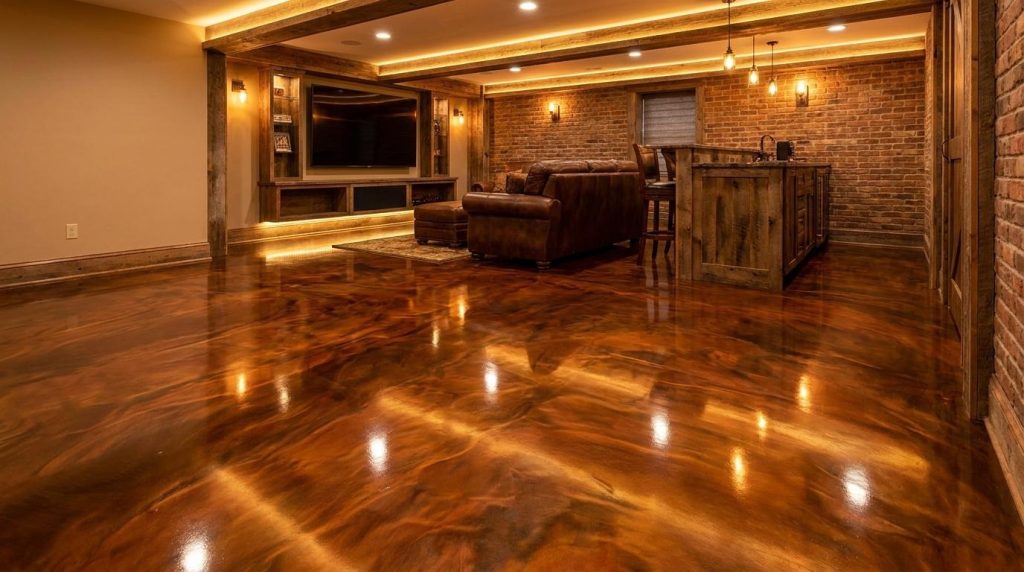
Copper and bronze metallic floors bring warmth to spaces that feel industrial or cold. These tones suit basements converted into entertainment areas or home gyms, where the floor becomes the primary design element.
Warm metallics also camouflage minor surface imperfections better than lighter shades because the color variation is already part of the pattern. In older Cleveland homes built before the 1970s, where basement slabs often show patching and past moisture staining, a copper metallic absorbs those irregularities into the finish rather than highlighting them.
Bronze tones run slightly cooler than pure copper and tend to photograph more consistently. For homeowners choosing from digital samples, bronze is easier to preview because its color holds across different lighting temperatures. Pairing either shade with warm-toned LED fixtures and natural wood accents creates a cohesive space that doesn’t rely on the floor alone.
Blues, Teals, and Dark Charcoal Finishes
Ocean blue and teal metallics produce the most dramatic visual impact but need enough square footage for the swirl pattern to develop. A standard two-car garage gives these colors room to breathe. In smaller spaces, the swirl compresses and the color reads as a solid rather than a metallic.
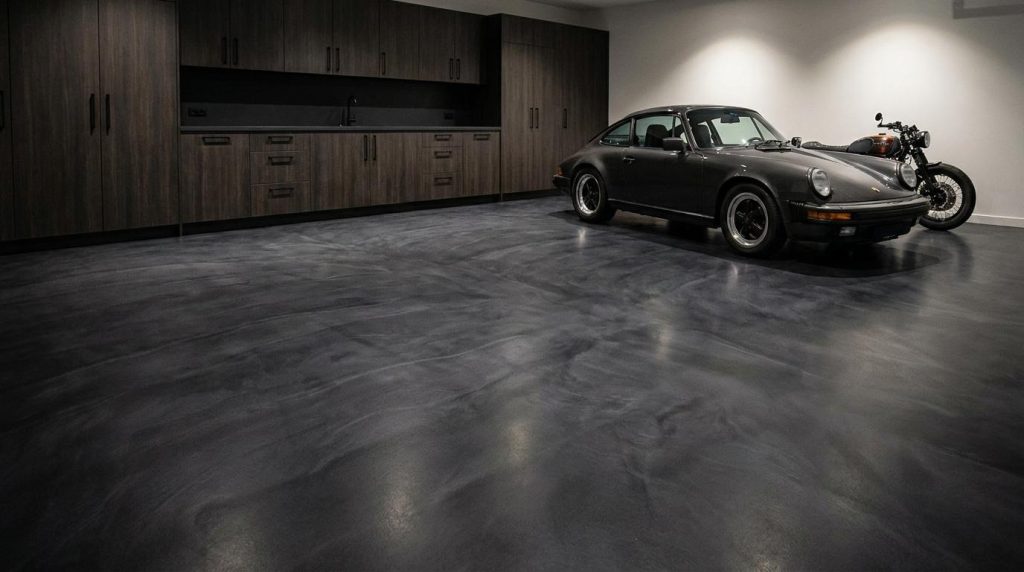
Charcoal metallics create a deep, matte-adjacent floor that looks more like polished stone than a coating. Showrooms and commercial lobbies use charcoal to build a clean backdrop that doesn’t compete with product displays.
For residential garages, charcoal pairs well with darker cabinetry and matte black hardware, a combination that’s especially popular among homeowners requesting garage floor coatings in Bay Village and Westlake. The downside is visibility: dust and light-colored debris show more on charcoal than on silver or copper, which means more frequent sweeping in a working garage.
Frequently Asked Questions
Does metallic flooring scratch easily?
Metallic polyurea polyaspartic coatings resist scratching significantly better than traditional metallic epoxy because the polyurea base bonds mechanically to the concrete through diamond grinding. Surface scratches from rolling tool chests or dragging equipment rarely penetrate the topcoat. Cleveland Concrete Coatings adds a polyaspartic clear coat over every metallic floor for an extra layer of impact resistance.
Can I choose a custom metallic color blend?
Custom metallic color blends are available for homeowners who want a floor that matches specific design elements in the space. Installers mix two or more metallic pigment colors during application to create unique transitions. The final appearance depends on how the pigments interact as the coating cures, so no two custom blends look identical.
How long does a metallic floor coating last?
A professionally installed metallic polyurea polyaspartic floor coating typically lasts 15 to 20 years in a residential garage with normal use. The polyaspartic chemistry resists Ohio’s freeze-thaw cycles, road salt tracked in from driveways, and hot tire contact more effectively than traditional epoxy, which often begins yellowing or peeling within three to five years.
Find the Metallic Shade That Fits Your Space
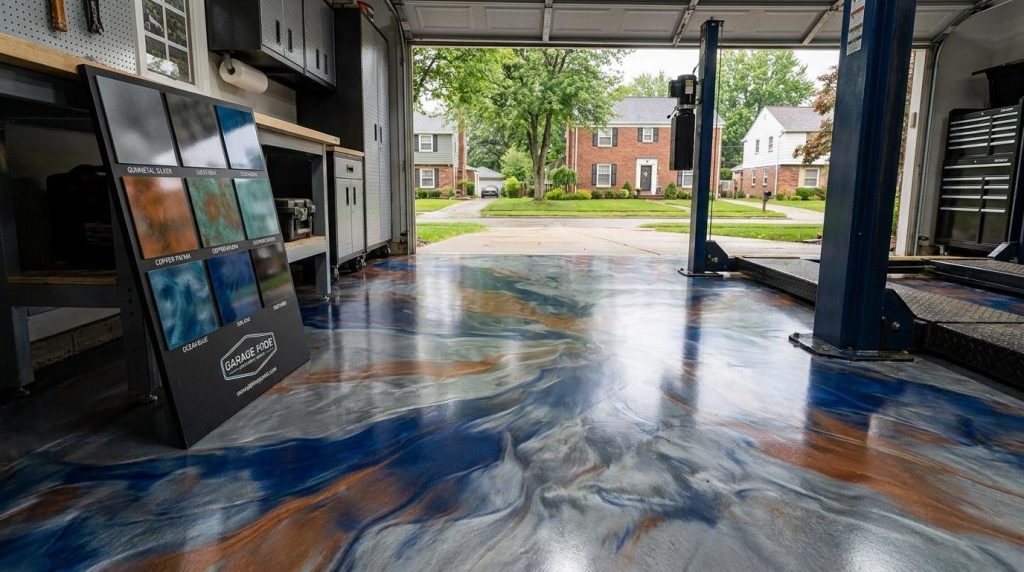
There’s no single best metallic color, only the one that suits your room. A dark, north-facing garage comes alive under silver. A basement you’ve turned into a gym or lounge feels warmer in copper. A showroom stays clean and uncluttered behind charcoal. Match the shade to the light the space gets and the mood you’re after. Remember the practical side too: charcoal shows every speck of dust, while silver and copper hide it. So, if you actually work in the garage, a lighter, busier pattern means less sweeping.
Whatever color you land on, the floor goes down in a day and holds up to Northeast Ohio’s salt, freeze-thaw, and hot tires for years. For a free estimate, contact Cleveland Concrete Coatings at (216) 280-9477.

Benjamin & Andrew Smola are the owners of Cleveland Concrete Coatings, a concrete coating company based in Cleveland. With a hands-on approach and local expertise, Benjamin, Andrew, and their team are dedicated to delivering durable, high-quality flooring solutions for homes and businesses throughout the area.