
Epoxy pebble flooring binds natural stone aggregate in resin to create a slip-resistant, water-draining surface for pool decks and patios, at an installed cost of $8 to $15 per square foot. The detail that decides how long it lasts is the resin. Standard epoxy yellows and loses its grip on the aggregate within three to five years in full sun, while polyurethane-bound systems stay flexible throughout Ohio’s freeze-thaw cycles. With resealing, they can last 15 to 20 years.
That difference is why two pebble floors at very different prices can look identical in a showroom and perform nothing alike outdoors. Cleveland Concrete Coatings installs its LuxuryStone or Vuba Stone flooring system, which uses polyurethane resin built for Northeast Ohio’s sun, storms, and 50-plus freeze-thaw cycles each winter. The following sections explain where pebble flooring works best, how the systems compare, and what to ask before you sign a quote.
What Is Epoxy Pebble Flooring?
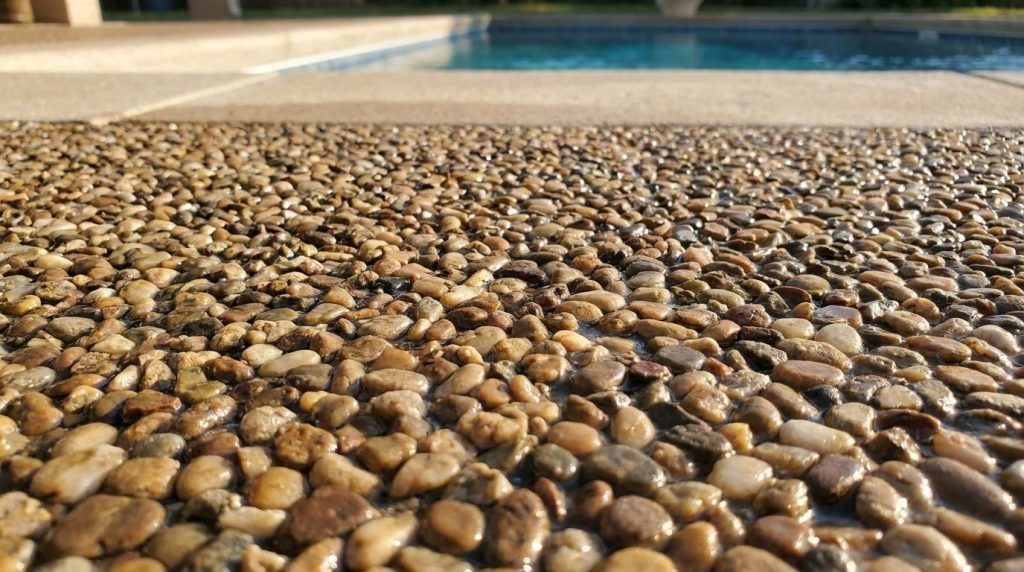
Epoxy pebble flooring combines natural stone aggregate with a binding resin to create a textured, porous surface that drains water rather than pooling it. The aggregate gives the floor its visual texture and slip resistance, while the resin holds everything together and determines outdoor longevity.
Standard systems use epoxy resin, which bonds well to concrete but degrades under UV exposure and Ohio’s freeze-thaw cycling. Prolonged sun yellows the resin and weakens the bond between stone and binder, leading to loose aggregate and rough patches within a few years. Polyurethane-bound systems hold up longer because the resin stays flexible in cold weather, a performance gap that explains why stone epoxy flooring’s cost and durability vary so widely across product lines.
In Cleveland, where summer storms soak the deck while the pool is in use, the resin choice shows up fastest in outdoor installations.
Where Pebble Flooring Works Best in Cleveland
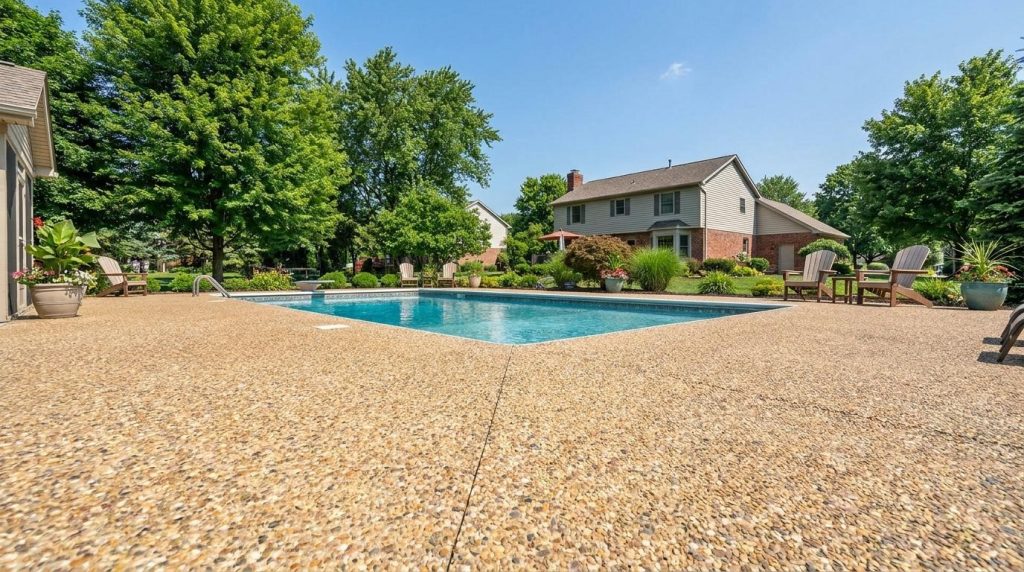
Pool decks are the most common application because pebble flooring drains standing water and stays cooler underfoot than poured concrete or pavers. The textured surface provides natural slip resistance even when wet, which matters for families using the deck all summer. Cleveland Concrete Coatings installs pebble stone systems on residential pool decks across Northeast Ohio, where Lake Erie humidity and 40 to 50 freeze-thaw cycles per winter push standard overlays past their limits.
Patios rank second, especially in homes where the existing concrete has surface cracks or discoloration that a standard coating can’t fully cover. The stone aggregate is thick enough to bridge hairline cracks and mask old staining, a common fix in established Rocky River neighborhoods where decades-old patio slabs show their age but the base is still sound. Walkways connecting the house to detached garages also work well because the texture provides traction through snow and ice without additional anti-slip treatments.
LuxuryStone vs Standard Epoxy Stone Systems
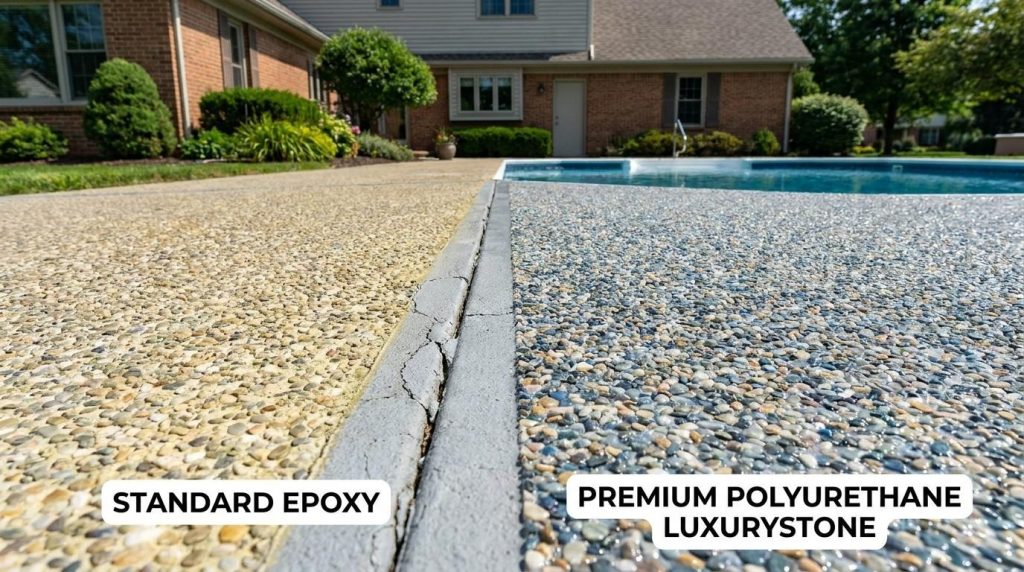
LuxuryStone uses natural stone aggregate bound in polyurethane resin instead of epoxy. The difference matters most outdoors, where UV exposure and temperature swings stress the resin every day. Epoxy-based stone systems tend to yellow and lose aggregate adhesion within three to five years on a full-sun pool deck. Polyurethane resin resists both.
LuxuryStone also requires resealing approximately every four to five years, which refreshes the surface and restores the water-repellent barrier. Standard epoxy stone systems degrade faster but don’t have a documented reseal schedule because most don’t last long enough for resealing to matter. The upfront cost runs higher, but the extended lifespan reduces the per-year cost over a 15-year window.
For Cleveland homeowners comparing quotes, the key question is which resin binds the stone. A lower price usually means epoxy, which saves upfront but costs more in replacement cycles over a decade. To see what a polyurethane-bound system would run for your deck or patio, try our pebble flooring cost calculator.
Frequently Asked Questions
Is epoxy pebble flooring slippery when wet?
Epoxy pebble flooring is not slippery when wet because the natural stone aggregate creates a textured surface with built-in traction. Water passes through the porous layer rather than sitting on top, which reduces the hydroplaning effect common on smooth-finished concrete and standard epoxy coatings. Slip resistance improves further with smaller aggregate sizes.
How long does pebble stone flooring last on a pool deck?
Pebble stone flooring installed with polyurethane resin typically lasts 15 to 20 years on a Cleveland pool deck when resealed every four to five years. Epoxy-based pebble systems usually last three to seven years in full-sun applications because UV breaks down the epoxy binder. The resin type, not the stone, is the primary factor in outdoor longevity.
Can pebble flooring be installed over existing concrete?
Yes, pebble stone flooring installs directly over existing concrete when the surface is structurally sound and properly prepared. Cleveland Concrete Coatings diamond-grinds the existing slab to create a mechanical bond before applying the stone system. Cracks wider than a quarter inch need repair first, and any previous sealers or coatings must be fully removed.
Your Pool Deck Deserves a Surface Built for Cleveland Summers
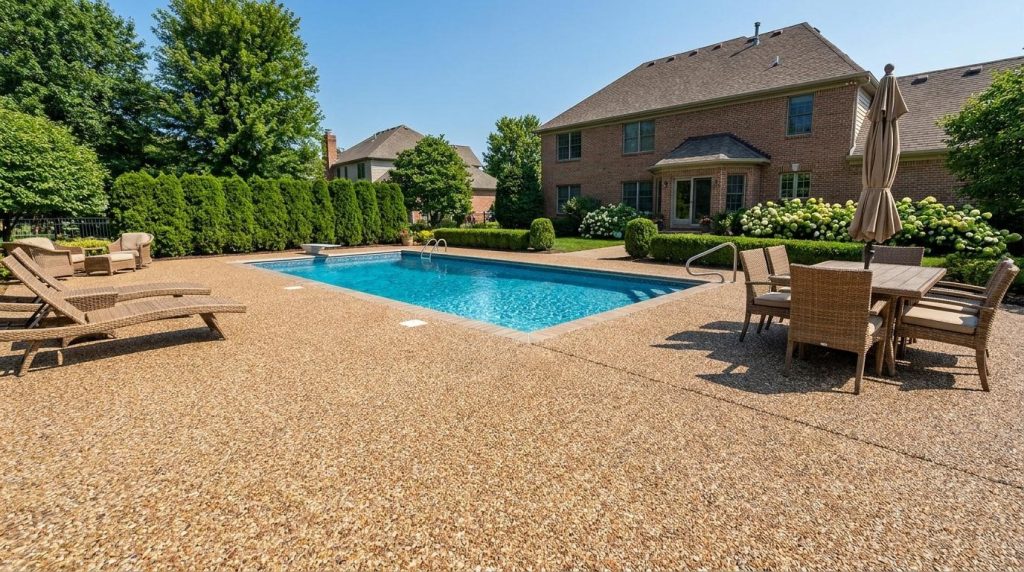
When you compare pebble flooring quotes, one question cuts through the rest: which resin binds the stone? Epoxy is tempting with its cheaper price, but on a full-sun pool deck it yellows, loosens, and needs replacing in a handful of years. Polyurethane costs more upfront and lasts three to four times as long, which is what actually makes it the cheaper floor over a decade. Either way, the stone on top looks the same. It’s the binder underneath that determines where your money goes.
Pebble flooring is installed in a day, handles foot traffic within 24 hours, and stands up to the water, chemicals, and freeze-thaw that wear ordinary decks down. For a LuxuryStone estimate on your pool deck or patio, contact Cleveland Concrete Coatings at (216) 280-9477.

Benjamin & Andrew Smola are the owners of Cleveland Concrete Coatings, a concrete coating company based in Cleveland. With a hands-on approach and local expertise, Benjamin, Andrew, and their team are dedicated to delivering durable, high-quality flooring solutions for homes and businesses throughout the area.