
Pool deck resurfacing in Cleveland runs $3 to $15 per square foot. Basic overlays sit at the low end and polyurea or stone systems at the high end. Cleveland Concrete Coatings installs polyurea and LuxuryStone pool deck coatings built for Ohio weather.
A cracked pool deck worsens every winter as water seeps into fissures and expanding ice widens them, while uneven surfaces catch bare feet all summer. Most decks can be resurfaced without demolition. What separates a $3 patch from a $12 system that survives Ohio winters? The answer comes down to material and deck condition.
Resurfacing Options and Cost Ranges
Choosing the right resurfacing method is key to balancing budget, durability, and aesthetics for your outdoor living space.
Basic Concrete Overlays: $3 to $5 per Square Foot
This is the budget-friendly starting point. A thin layer of cement-based topping goes over your existing slab, and it can be tinted or textured to freshen up a deck that’s just looking worn or faded. The catch is durability: these thin overlays don’t stand up well to the freeze-thaw winters in North Royalton and across Northeast Ohio, so you’ll be resealing and patching more often to keep them looking good. They work best on decks with minor surface wear and no structural cracking.
Polyurea Polyaspartic Coatings: $7 to $12 per Square Foot
A step up in price and performance. These coatings are ground into the concrete for a strong mechanical bond, cure in a single day, and withstand pool chemicals, road salt, and temperature swings far better than a basic overlay. They also resist UV, so the color stays put instead of fading or yellowing in the sun.
Pebble Stone Systems: $8 to $15 per Square Foot
The top tier for a pool deck. Natural stone aggregate gives you built-in slip resistance and drainage, allowing the water to pass through instead of pooling. The polyurethane binder holds its color in direct sun without yellowing. The aggregate is also thick enough to bridge hairline cracks that thinner coatings can’t hide, which is why epoxy pebble flooring for pool decks has become a popular pick for Cleveland homeowners who want a deck that lasts all season.
Why Cleveland Pool Decks Deteriorate Faster
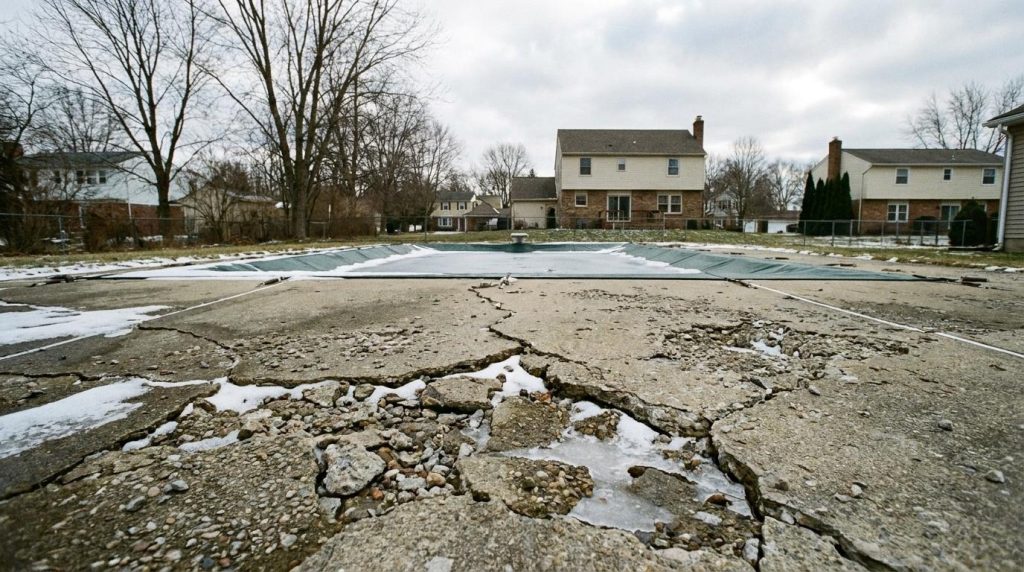
Cleveland averages 40 to 50 freeze-thaw cycles per year, more than double what Sun Belt cities experience. Each cycle pushes water into concrete pores, freezes it, and widens the opening. Pool decks take extra punishment because chlorinated water sits on the surface for hours, accelerating the chemical breakdown of untreated concrete.
Lake Erie’s humidity keeps the concrete saturated longer between rain events, which gives the freeze-thaw process more water to work with each winter. Decks poured before the 2000s often lack adequate air entrainment in the concrete mix, making them especially vulnerable. The result is surface spalling, exposed aggregate, and cracks that widen a fraction of an inch every season.
Cost and Installation Timeline
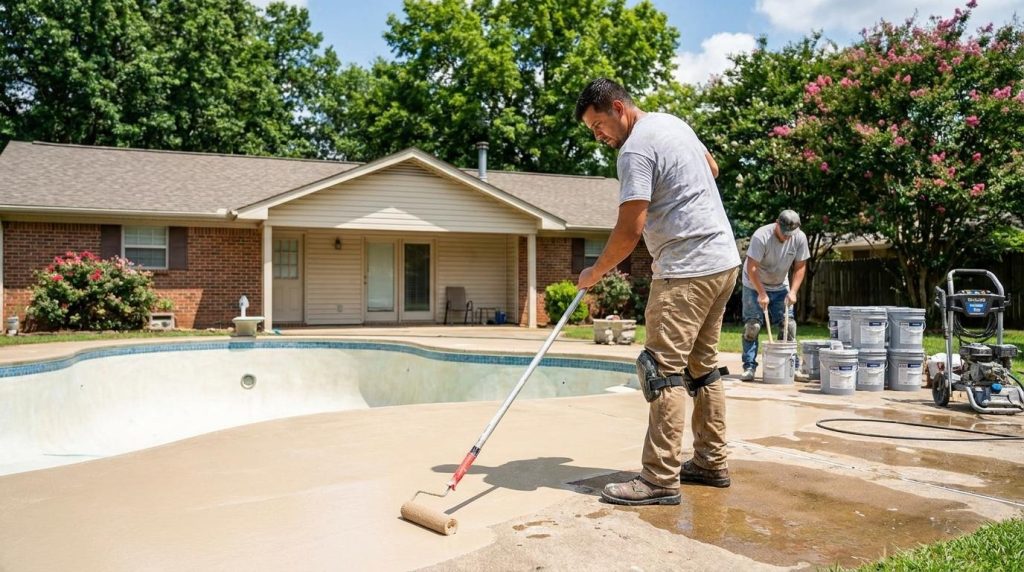
Total project cost depends on square footage, deck condition, and which system you choose. A 600-square-foot pool deck typically runs $1,800 to $3,000 for a basic overlay and $4,200 to $9,000 for a polyurea or pebble stone system. Decks with significant cracking or previous coating failure need additional prep, which can add $1 to $3 per square foot.
Cleveland Concrete Coatings completes most LuxuryStone or Vuba Stone pool deck installations in a single day. The deck is ready for foot traffic within 24 hours and full use within 48. Scheduling in late spring or early summer locks in pricing before peak demand and ensures the deck is ready for the first swim of the year. To get an estimate for your own deck before you call, try our instant concrete coating cost calculator.
Frequently Asked Questions
Is resurfacing a pool deck worth it?
Resurfacing a pool deck is worth it when the existing concrete has surface damage but the slab underneath is structurally sound. Resurfacing costs 40 to 60 percent less than full demolition and replacement, and a polyurea or stone system restores both appearance and slip resistance. Full replacement only makes sense when the slab has deep structural cracks or significant settlement.
Can you resurface a pool deck in cold weather?
Pool deck resurfacing can be done in cooler months when using polyurea polyaspartic coatings, which cure at temperatures as low as 35°F. Traditional epoxy and overlay systems require surface temperatures above 50°F, which limits their installation window in Cleveland to roughly May through September. Cleveland Concrete Coatings schedules winter installations when temperature forecasts confirm a safe cure window.
How long does a resurfaced pool deck last?
A resurfaced pool deck lasts 10 to 20 years depending on the coating system and maintenance schedule. Polyurea coatings and LuxuryStone systems fall at the upper end of that range because both resist UV damage and freeze-thaw cycling. Basic overlays and epoxy coatings typically need replacement within three to seven years in Cleveland’s climate.
Get a Pool Deck Quote Before Summer Peaks
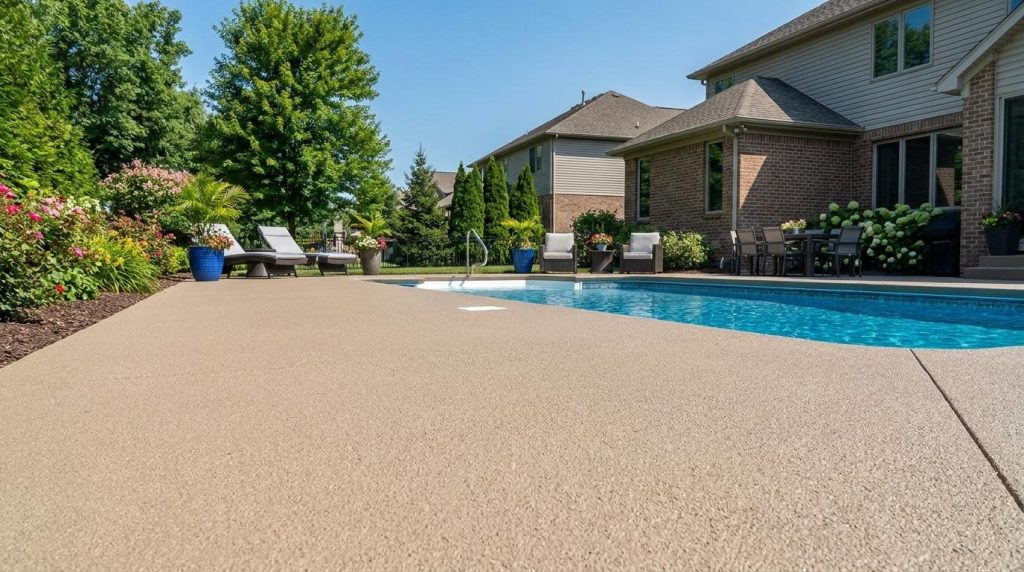
The right resurfacing method depends on the deck’s current condition, how much protection you need from Cleveland’s winters, and whether slip resistance or aesthetics ranks higher. A polyurea coating delivers the fastest turnaround, while a LuxuryStone system adds the texture and drainage that make a deck comfortable for bare feet all season. Scheduling before peak summer demand also locks in shorter lead times.
For a free pool deck estimate, contact Cleveland Concrete Coatings at (216) 280-9477.

Benjamin & Andrew Smola are the owners of Cleveland Concrete Coatings, a concrete coating company based in Cleveland. With a hands-on approach and local expertise, Benjamin, Andrew, and their team are dedicated to delivering durable, high-quality flooring solutions for homes and businesses throughout the area.