
A standard epoxy garage floor takes two to three days to apply and five to seven additional days to fully cure before you can park on it. The total timeline from start to fully cured for vehicle traffic is 7 to 10 days under ideal conditions. Cleveland Concrete Coatings offers a polyurea polyaspartic alternative that can be installed in one day and accepts vehicles within 48 hours.
Ohio’s coating season runs from April through October. Epoxy requires concrete slab temperatures above 55°F and ambient humidity below 85% to cure properly, which narrows the reliable installation window in Cleveland to roughly six months. Scheduling in spring or fall means gambling on weather, while summer’s humidity brings its own curing complications.
The Standard Epoxy Garage Floor Timeline

A professional epoxy installation follows a multi-day sequence. Each phase has a minimum time requirement that can’t be shortened without risking adhesion failure or incomplete curing.
Day 1: Surface Preparation
Diamond grinding removes the top layer of concrete to create a mechanical profile for coating adhesion. Crack repair, joint filling, and moisture testing happen during this phase. For garages with old paint, sealers, or failed coatings, removal adds time. Prep alone takes a full day for most two-car garages.
Days 2-3: Coating Application
Primer goes down first and needs partial cure before the epoxy base coat. The base coat receives decorative flakes or metallic pigment, then a clear topcoat seals everything. Each layer needs time between applications. Multi-coat systems require two full days of application work depending on temperature and humidity in the garage.
Days 4-10: Curing
Epoxy reaches light foot traffic readiness in 24 to 72 hours after the final coat. Full chemical cure for vehicle weight takes 5 to 7 days. During this window, you can’t park in the garage, place heavy items on the floor, or allow temperature swings that could compromise the cure. For homeowners weighing whether epoxy garage flooring is worth it, this 7- to 10-day garage lockout is often the deciding factor.
How Ohio Weather Affects Cure Time
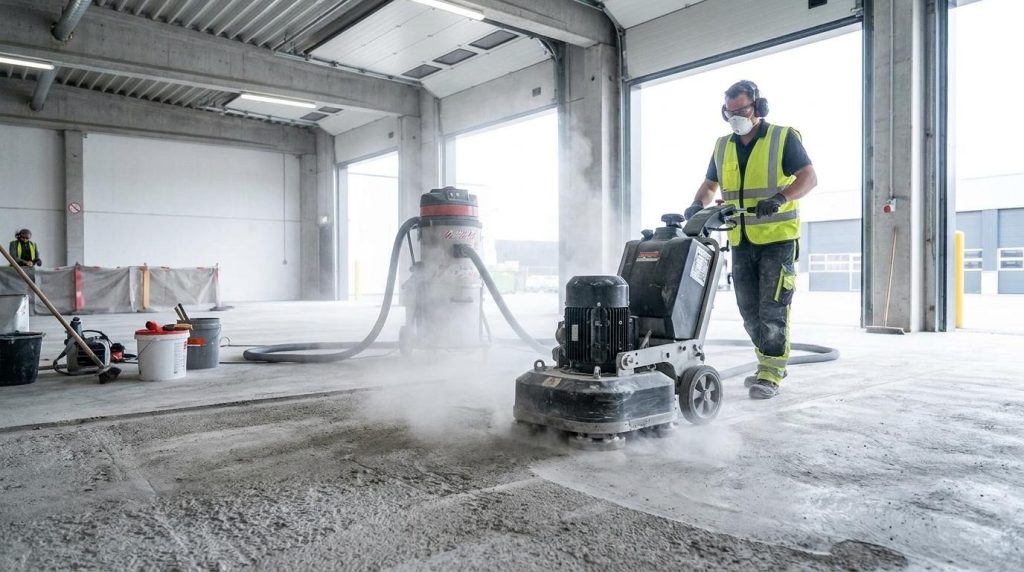
Cleveland’s climate creates specific challenges for epoxy cure schedules that installers in warmer, drier regions don’t face.
- Cold concrete slabs. Epoxy won’t cure below 55°F. Cleveland garages regularly drop below that threshold from November through March. Even in April and October, overnight temperatures can bring slab temps below the cure threshold and stall the process.
- Humidity spikes. Summer humidity above 85% slows epoxy cure dramatically and can cause clouding, blushing, or surface defects. Cleveland’s average summer humidity sits above 70%, with frequent spikes into the 80-90% range.
- Temperature fluctuation. A 30°F swing between day and night temperatures is common in spring and fall. These swings cause concrete to expand and contract during the cure window, potentially cracking the rigid epoxy before it reaches full hardness.
Homeowners in Bay Village and along the lakefront face even more humidity from Lake Erie’s influence, which further narrows the reliable epoxy cure window compared to inland Cleveland suburbs.
How Polyurea Polyaspartic Cuts the Timeline to One Day
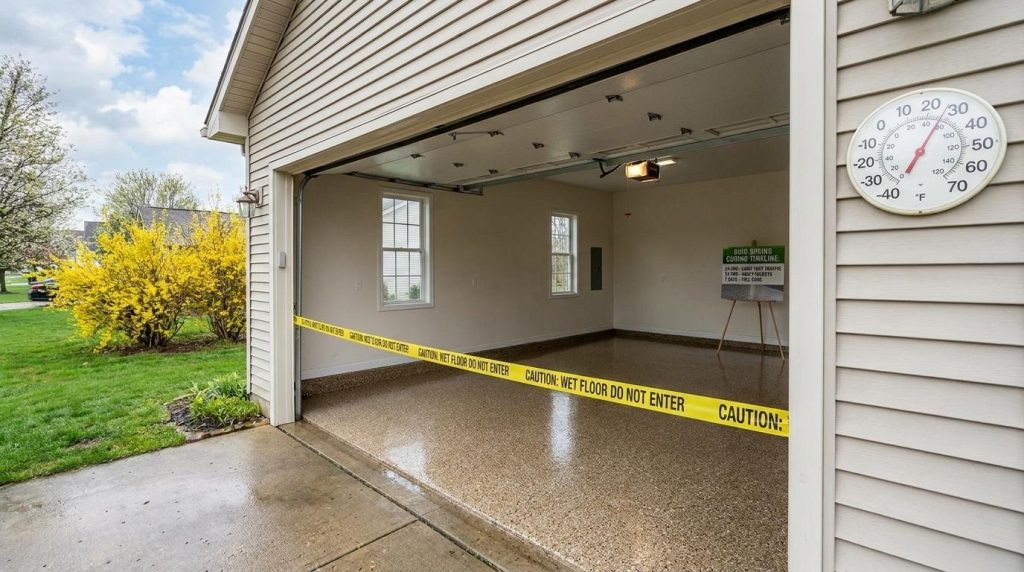
Cleveland Concrete Coatings installs polyurea polyaspartic garage floor systems that compress the entire process into a single working day. The chemistry cures differently than epoxy, which eliminates the multi-day waiting game.
- Morning: Diamond grinding, crack repair, and surface prep.
- Afternoon: Polyurea base coat, decorative flakes, and polyaspartic topcoat applied. The rapid-cure chemistry allows layers within hours rather than days.
- 24 hours: Light foot traffic.
- 48 hours: Vehicle parking and full use.
Polyurea also cures in temperatures as low as 40°F and handles humidity that would ruin an epoxy application. That extends the installation season in Ohio from six months to nearly year-round. The full comparison between epoxy and polyurea shows the performance advantages beyond just timeline, including UV stability, flexibility, and hot tire resistance.
Frequently Asked Questions
Can I speed up epoxy cure time with a heater or fan?
Space heaters can maintain slab temperature above 55°F, but uneven heating causes differential curing that leads to soft spots or peeling later. Fans help with humidity but can blow dust onto wet coating. Professional installers monitor conditions rather than forcing them, which is why weather delays are common with epoxy.
What happens if I park on epoxy before it fully cures?
Tire impressions, soft spots, and permanent indentations. The coating appears hard to the touch but hasn’t reached full chemical crosslinking. Vehicle weight compresses the partially cured material, creating damage that can’t be buffed or repaired without re-coating the affected area.
Is there a best month to install a garage floor coating in Cleveland?
For epoxy, May through September offers the most reliable conditions. For polyurea polyaspartic from Cleveland Concrete Coatings, any month works because the chemistry cures in a wider temperature and humidity range. Spring and fall are popular because homeowners want the project done before or after heavy garage-use seasons.
Schedule Your One-Day Garage Floor Installation
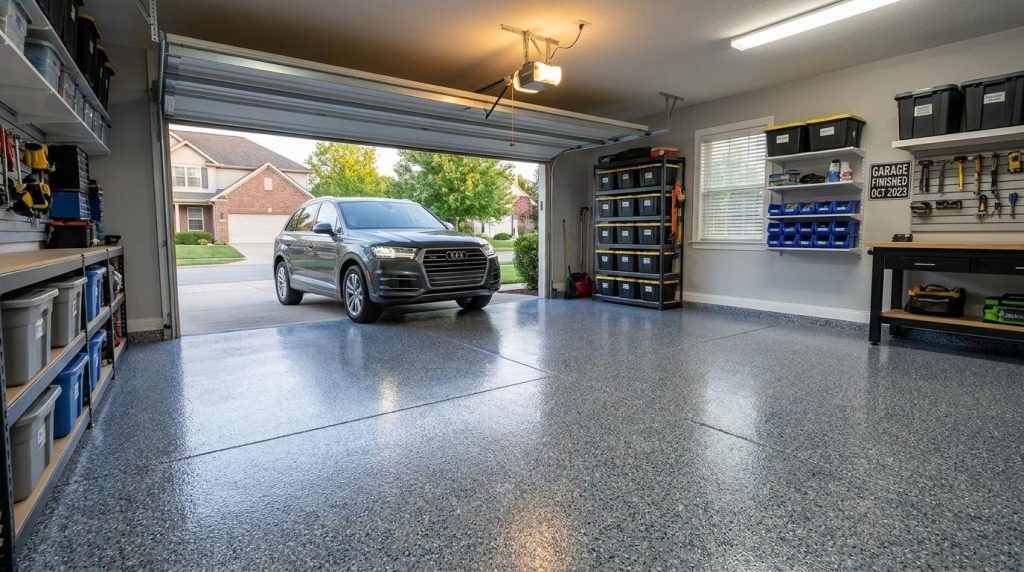
The timeline question comes down to chemistry. Epoxy needs ideal conditions and a week of patience. Polyurea polyaspartic needs one day of installation and 48 hours before parking. For Cleveland homeowners who can’t afford to lose their garage for a week or who don’t want to gamble on Ohio’s weather, the one-day option eliminates the risk entirely.
Cleveland Concrete Coatings installs polyurea polyaspartic garage floors in a single day, year-round, with zero VOC fumes. Contact us or call (216) 280-9477 to schedule your installation.

Benjamin & Andrew Smola are the owners of Cleveland Concrete Coatings, a concrete coating company based in Cleveland. With a hands-on approach and local expertise, Benjamin, Andrew, and their team are dedicated to delivering durable, high-quality flooring solutions for homes and businesses throughout the area.