
Metallic epoxy garage floors cost $8 to $15 per square foot and create a swirling, reflective finish. Flake epoxy runs $5 to $10 per square foot and uses vinyl chips to build a textured, multicolor surface. Both use the same epoxy base resin, so their durability is identical. Cleveland Concrete Coatings breaks down the real differences below.
A homeowner in Painesville had a metallic epoxy floor installed two years ago. The showroom-quality swirl pattern drew compliments for the first six months. By year two, yellowing had dulled the metallic effect and hot tire marks dotted the surface near both parking spots. The finish that sold the project became the reason for the redo.
How Metallic and Flake Finishes Differ
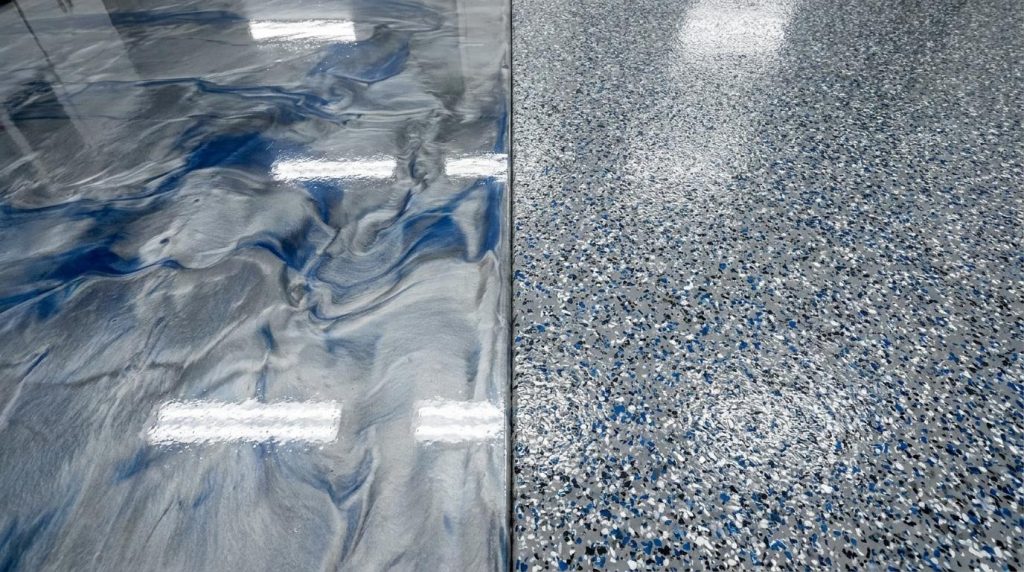
The difference between metallic and flake epoxy is entirely in the decorative layer. The base resin, primer, and topcoat are the same standard epoxy chemistry in both systems. What changes is what goes on top of the base coat.
Flake Epoxy
Vinyl or acrylic chips are broadcast into the wet base coat, creating a speckled, granite-like pattern. The chips add natural texture and slip resistance. Flake systems hide small imperfections in the concrete and are easier for installers to apply consistently. Flake finishes rank high on practicality and consistently land near the top in any garage floor coating comparison.
Metallic Epoxy
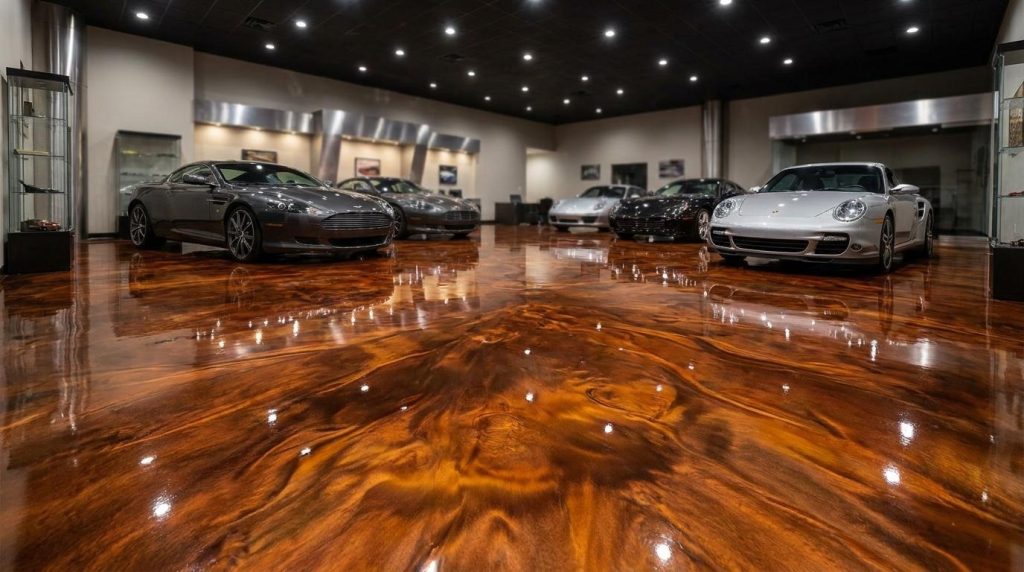
Metallic pigments are blended into the epoxy and manipulated by hand during application to produce a unique, flowing pattern. No two metallic floors look alike. The result is a high-gloss, reflective surface that mimics polished stone or liquid metal. The visual effect is premium, but the smooth surface offers less traction than flake when wet.
Cost, Durability, and Maintenance Compared
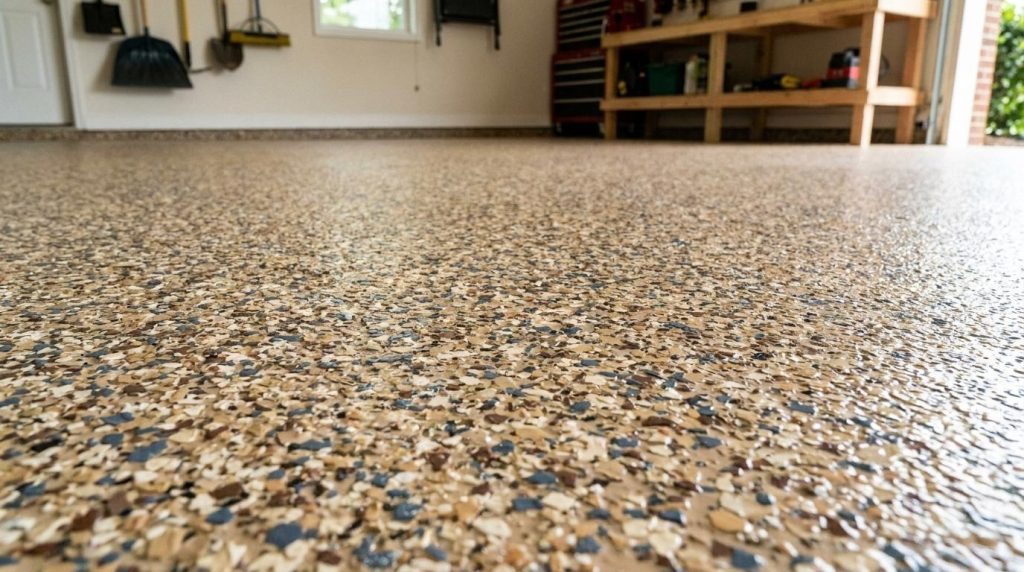
Both finishes share the same epoxy base, so their performance under stress is identical. The differences are cosmetic and practical:
- Cost. Flake epoxy runs $5 to $10 per square foot installed. Metallic runs $8 to $15. The premium is the pigment and the labor-intensive manipulation technique.
- Yellowing. Both yellow under UV exposure. Metallic finishes show it more because the color shift distorts the reflective pattern you paid extra for.
- Hot tire pickup. Both are equally vulnerable. Epoxy softens under tire heat regardless of the decorative layer on top.
- Slip resistance. Flake chips add natural texture. Metallic finishes are smooth and can be slippery when wet unless a separate anti-slip additive is applied.
- Maintenance. Both clean the same way. Flake hides dirt and minor scuffs better because the multicolor pattern masks wear.
Installation technique is the primary driver of both the aesthetic and the price. See our metallic epoxy flooring guide for the full process.
What Cleveland Homeowners Should Consider
Cleveland’s garage conditions put specific stress on floor coatings. Freeze-thaw cycles crack rigid epoxy. Road salt corrodes the surface. Summer humidity accelerates yellowing. Neither metallic nor flake epoxy is engineered to handle these conditions better than the other because the base chemistry is identical.
Cleveland Concrete Coatings installs polyurea polyaspartic garage floor systems that solve the problems both epoxy types share. Polyurea is UV-stable, hot tire resistant, flexible enough to handle freeze-thaw movement, and installs in one day with zero VOC fumes. Decorative flake options in a full range of colors and chip blends give homeowners the look of flake epoxy with none of the epoxy limitations. The performance gap between epoxy and polyurea grows wider in cold-weather climates, which our coating comparison breaks down system by system.
Frequently Asked Questions
Can I get a metallic look with polyurea polyaspartic coating?
Cleveland Concrete Coatings offers a wide range of decorative finishes using polyurea polyaspartic, including color blends, custom flake patterns, and high-gloss options. While the liquid-metal swirl effect is specific to metallic epoxy, polyurea delivers comparable visual impact without the yellowing and peeling risks.
Which epoxy finish hides garage floor imperfections better?
Flake epoxy hides imperfections better than metallic. The multicolor chip pattern camouflages minor cracks, divots, and surface irregularities. Metallic epoxy’s smooth, reflective finish actually highlights imperfections because light bounces off the surface and makes uneven spots more visible.
How long before metallic or flake epoxy needs replacement in Ohio?
Both typically last 5 to 10 years in an Ohio garage before yellowing, peeling, or hot tire damage warrants re-coating. The timeline depends on how much UV exposure the floor gets and whether the garage door stays open regularly. Polyurea systems commonly last twice that in the same conditions.
Choose the Finish That Fits Your Garage
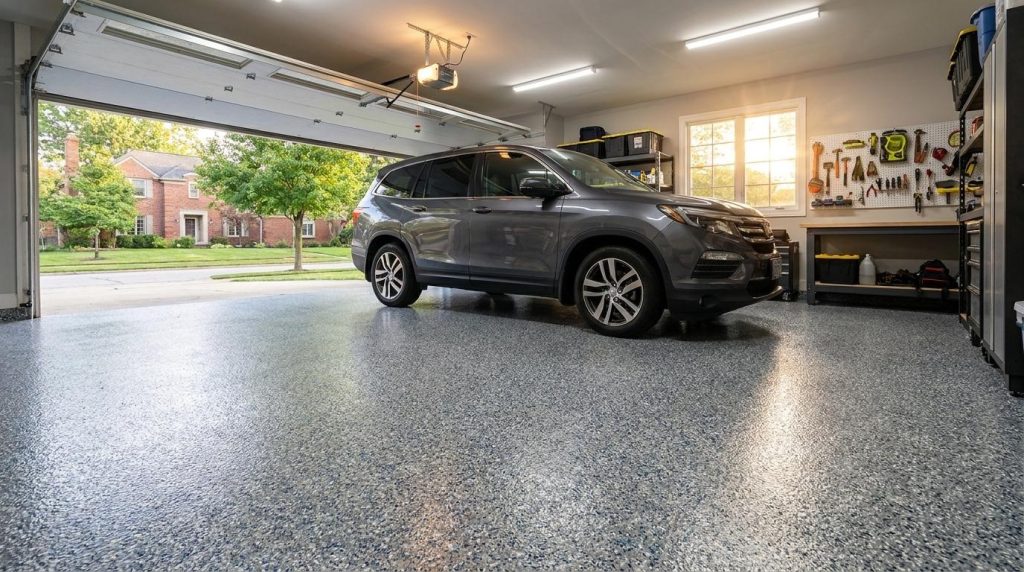
If the decision is strictly between metallic and flake epoxy, flake wins on value. It costs less, isn’t as slippery, and conceals wear better. Metallic wins on visual drama if budget allows and you accept its shorter aesthetic lifespan. But the deeper question is whether epoxy is the right base chemistry for a Cleveland garage at all. Polyurea polyaspartic gives you the decorative options and a coating that survives Ohio’s climate.
Cleveland Concrete Coatings installs it in a single day. Contact us or call (216) 280-9477 to see which finish fits your space.

Benjamin & Andrew Smola are the owners of Cleveland Concrete Coatings, a concrete coating company based in Cleveland. With a hands-on approach and local expertise, Benjamin, Andrew, and their team are dedicated to delivering durable, high-quality flooring solutions for homes and businesses throughout the area.