
Whether an epoxy garage floor is worth it depends on which product you’re comparing and who’s installing it. Professional-grade epoxy on diamond-ground concrete typically lasts 5 to 7 years. DIY kits average 2 to 4. Cleveland Concrete Coatings installs a polyurea polyaspartic system that’s 4 times stronger and lasts 2 to 3 times longer than epoxy.
Most homeowners are really weighing one of two comparisons: a big-box kit against professional installation, or standard epoxy against a newer coating system. Confusing the two produces the buyer’s remorse we hear about regularly, usually after a floor starts peeling at month eighteen.
In this blog post, we break down exactly where epoxy earns its reputation and where it doesn’t.
Is Epoxy Actually Worth the Cost?
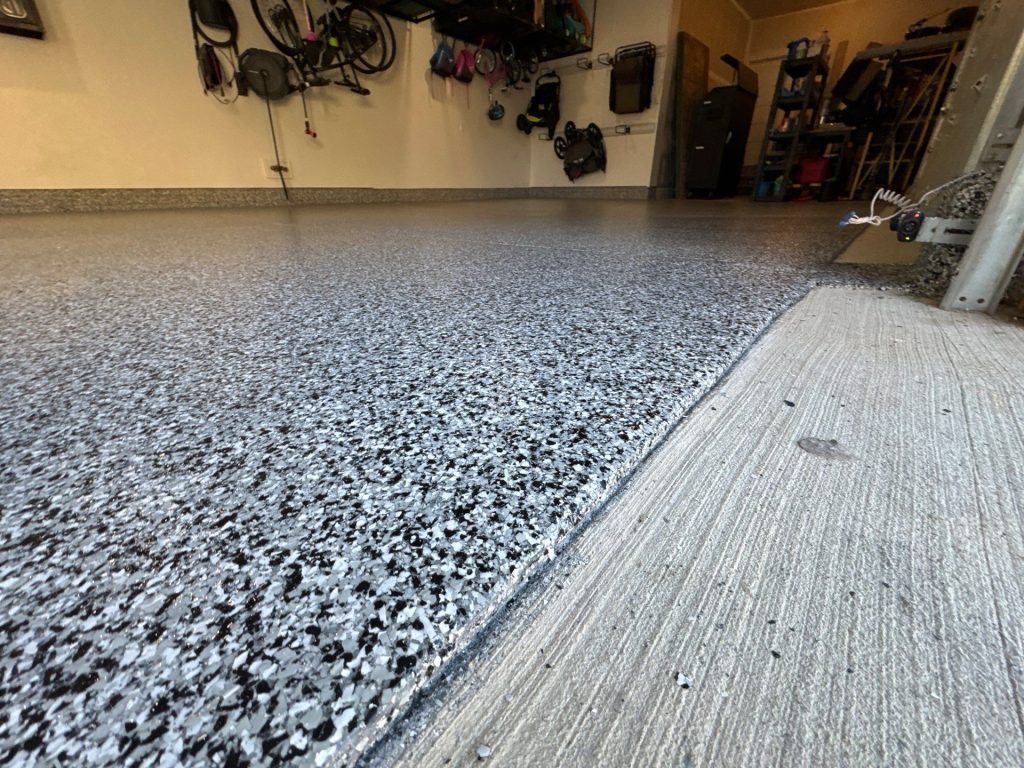
Epoxy has a real track record in the right conditions. It bonds well to prepared concrete, creates a hard cleanable surface, and costs less upfront than premium alternatives. For climate-controlled spaces (finished basements, indoor workshops, showroom floors without vehicle traffic), professionally installed epoxy is a reasonable choice.
In a Northeast Ohio garage, the math changes. Greater Cleveland sees dozens of freeze-thaw cycles per winter, and epoxy is a rigid material. Each cycle stresses the bond between the coating and the slab, causing edge cracking and delamination over time. Replacing a failed floor at year five often costs nearly as much as the original installation—and the lower-upfront option often isn’t the cheaper one when you tally the numbers over fifteen years.
What Epoxy Does Well
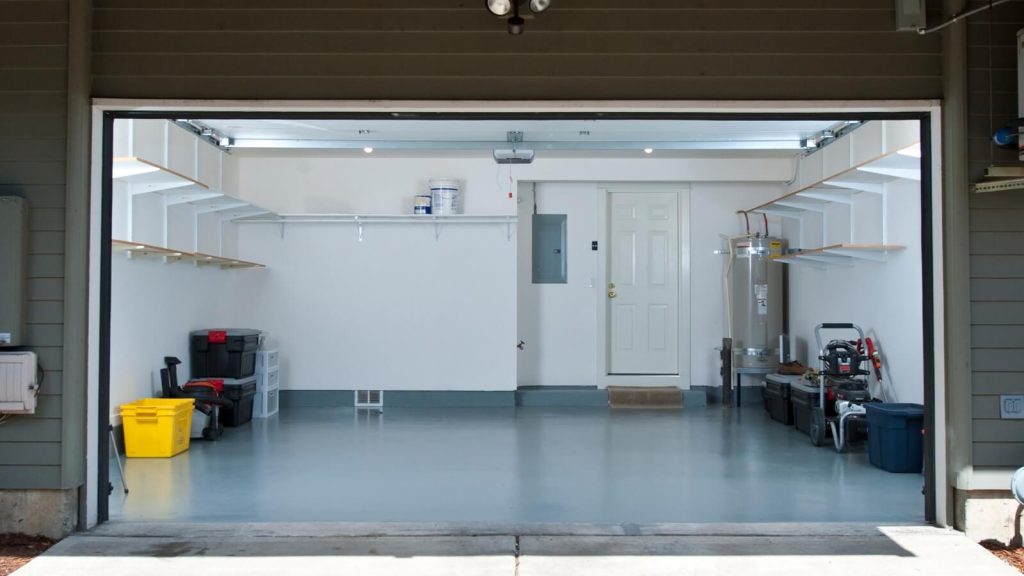
Comparing garage floor coatings head to head shows where epoxy holds its ground: broad color selection, solid chemical resistance, and a finish that looks dramatically cleaner than bare concrete. In spaces with controlled temperature and moderate foot traffic, professionally installed epoxy produces results homeowners are happy with for years.
Where Epoxy Falls Short in a Cleveland Garage
Moisture vapor is the downside most homeowners don’t anticipate. Concrete slabs transmit groundwater vapor upward constantly. Epoxy doesn’t tolerate that pressure and eventually lifts, creating bubbles and peeling in sections. Mid-century construction in communities like Rocky River often has thinner vapor barriers, making this more common in older homes.
Hot tire contact is the second pattern. Vehicle tires get extremely hot after highway driving. Standard epoxy softens at elevated temperatures. A hot car parked on it partially bonds to the floor, then pulls sections up when it moves. This failure often surprises homeowners because the floor looks perfect until the first summer of regular use.
Comparisons that focus solely on installation price often miss downstream costs. A coating that lasts five years instead of fifteen means paying to redo the floor twice while a better system would still be performing.
The Better Alternative Cleveland Homeowners Are Choosing
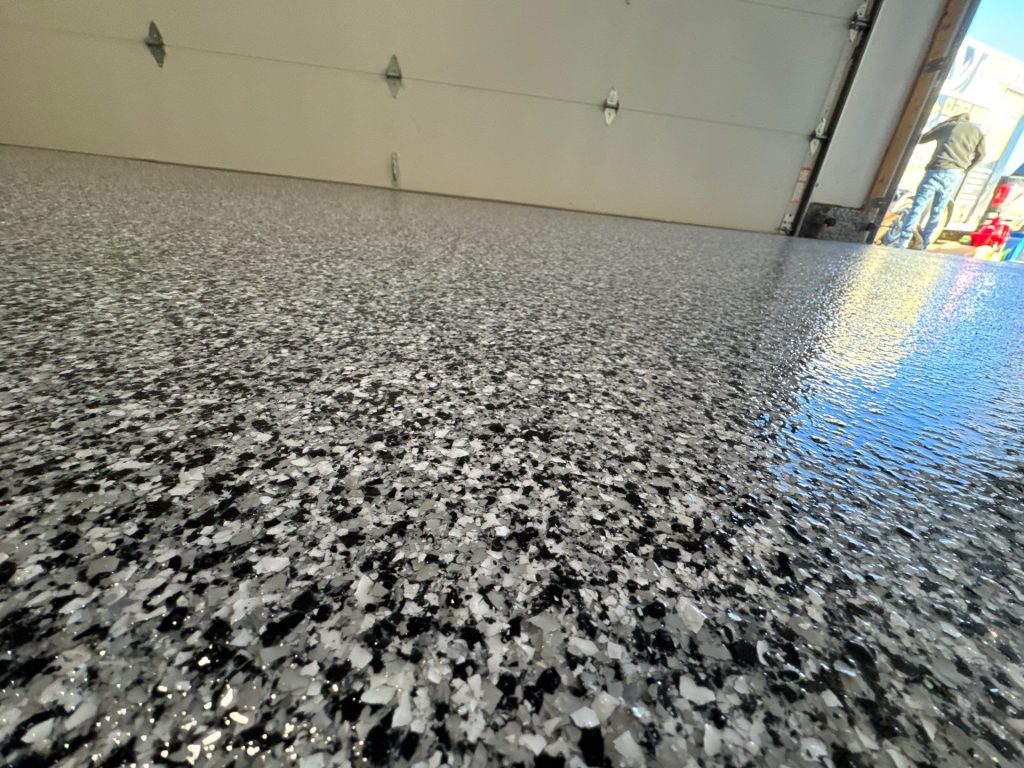
Cleveland Concrete Coatings installs polyurea polyaspartic concrete garage floor coatings across Northeast Ohio. The polyurea base coat is flexible so it moves with the concrete through freeze-thaw cycles rather than resisting them. The polyaspartic topcoat is UV stable and chemically resistant, addressing the yellowing and hot-tire pickup that lead to premature failures in standard epoxy. The full job is completed in a single day so Rocky River homeowners and others in our service area aren’t waiting days for their floor to cure.
Frequently Asked Questions
Can I install epoxy over an existing coating?
No, the new coating must bond directly to mechanically prepared concrete. Any existing sealer, paint, or previous coating must be fully removed by diamond grinding first. Applying new coating over an old layer is the most common reason garage floor installations fail within the first two years, regardless of product quality.
How long does professional epoxy last versus DIY kits?
Professional epoxy on diamond-ground concrete typically lasts 5 to 7 years in a residential garage. Consumer DIY kits use thinner formulations and rely on acid etching, which creates a shallower surface profile and weaker adhesion bond. Most DIY floors show failure within 2 to 4 years under vehicle traffic and Ohio’s freeze-thaw conditions.
Is polyurea polyaspartic more expensive than epoxy?
Polyurea polyaspartic costs more upfront, but the 15-year comparison typically favors it. Cleveland Concrete Coatings’ system lasts 2 to 3 times longer than standard epoxy, which usually means avoiding one or two full recoating cycles. The cost per year of reliable performance is lower than standard epoxy for most Northeast Ohio garages.
The Right Floor for the Right Conditions
Epoxy isn’t a bad product. It’s a solution that performs well in specific conditions and struggles in others. Those “others” describe most Cleveland-area garages: cold slabs, freeze-thaw stress, road salt, and regular vehicle traffic.
If you’re ready to find out what your floor actually needs, request a free quote from Cleveland Concrete Coatings and we’ll give you a straight assessment.