
Nature stone flooring uses natural stone aggregate bound in epoxy resin to create a decorative, textured surface for patios, pool decks, and garages. The system looks premium but carries every epoxy limitation: UV yellowing, resin breakdown, and reduced adhesion over time. Cleveland Concrete Coatings installs LuxuryStone, an alternative that replaces the epoxy binder with UV-stable polyurethane resin.
A homeowner in Bay Village had Nature Stone installed on their pool deck four years ago. The surface looked excellent during the first two summers. By year three, the epoxy binder had yellowed noticeably in the areas receiving direct afternoon sun, and sections near the pool’s edge needed patching where foot traffic wore through the weakened resin.
Here’s how the two systems actually compare on the part that matters most: the resin holding the stones together.
How Nature Stone and LuxuryStone Systems Differ

Both products start with natural stone aggregate. The difference is the binder that holds the stones together and bonds them to your concrete.
Nature Stone: Epoxy-Bound
Nature Stone uses an epoxy resin binder. Epoxy is rigid, UV-sensitive, and degrades under prolonged sun exposure. In Cleveland’s outdoor applications where the surface gets year-round UV and freeze-thaw stress, the epoxy binder is the weak point. It yellows, becomes brittle, and loses adhesion as the resin breaks down. The aggregate itself is durable, but it depends entirely on the binder for structural integrity, a dynamic our stone epoxy flooring guide explains in more detail.
LuxuryStone: Polyurethane-Bound
Cleveland Concrete Coatings’ LuxuryStone flooring uses a polyurethane resin binder instead of epoxy. Polyurethane is UV-stable, flexible, and resistant to the chemical breakdown that plagues epoxy-bound stone in outdoor settings. The stone aggregate stays locked in place because the binder doesn’t degrade under Cleveland’s sun, salt, and temperature cycles.
Where LuxuryStone Outperforms in Cleveland Conditions

Cleveland’s outdoor surfaces face UV exposure from April through October, freeze-thaw cycles from November through March, road salt runoff, and pool chemical contact. Each condition stresses the binder differently:
- UV resistance. Polyurethane binder won’t yellow or chalk. Nature Stone’s epoxy binder begins yellowing within two to three years of outdoor use.
- Flexibility. Polyurethane flexes with concrete expansion and contraction during freeze-thaw. Epoxy is rigid and cracks under the same stress.
- Slip resistance. LuxuryStone’s natural aggregate texture provides traction even when wet, which matters for pool decks and patios.
- Weed and moss resistance. The polyurethane binder doesn’t deteriorate into gaps where organic growth can establish. Epoxy stone systems develop voids over time as the binder fails.
Maintenance and Long-Term Cost
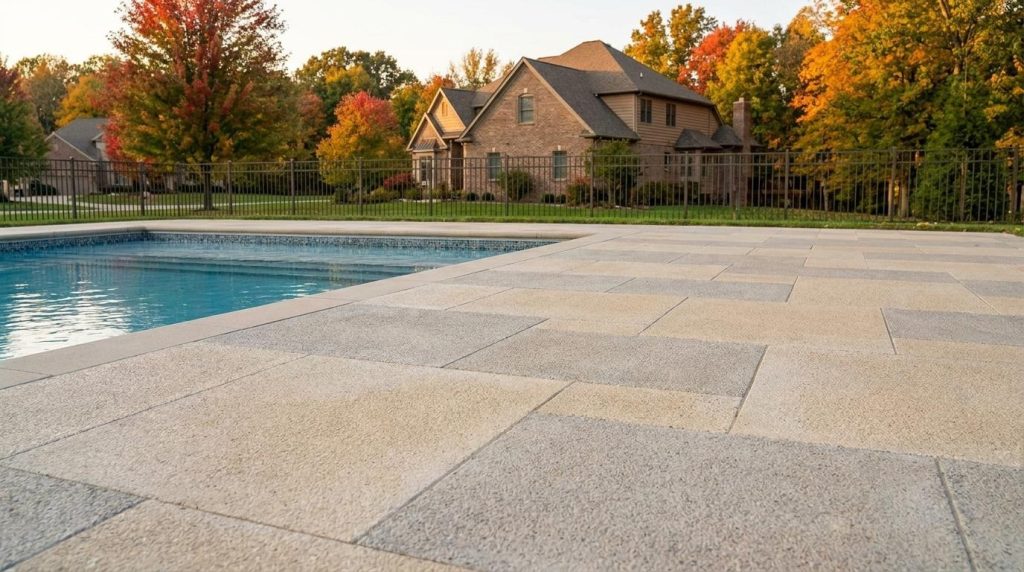
LuxuryStone requires resealing approximately every four to five years to maintain optimal appearance and protection. That’s a scheduled maintenance cost, not a repair. The difference between polyaspartic and LuxuryStone systems comes down to application type: LuxuryStone is a stone-overlay system for exterior aesthetics, while standard polyurea polyaspartic is a smooth coating system.
Nature Stone systems often require patching and repair before the resealing window because the epoxy binder fails in high-traffic or high-UV areas first. You end up paying for both repairs and resealing, rather than just maintenance resealing on a predictable schedule. Over a ten-year window, LuxuryStone’s total cost of ownership typically comes in lower despite comparable upfront pricing.
Frequently Asked Questions
How much does LuxuryStone flooring cost compared to Nature Stone?
Both products fall in the $8 to $15 per square foot range for professional installation. The upfront cost is comparable, but LuxuryStone’s polyurethane binder avoids the early repair costs that epoxy-bound systems accumulate within three to five years of outdoor use in Ohio.
Can LuxuryStone be installed over an existing Nature Stone surface?
It depends on the condition of the existing surface. If the old Nature Stone epoxy binder has failed significantly, the deteriorated material needs removal before new LuxuryStone goes down. Cleveland Concrete Coatings evaluates the existing surface condition during a free on-site estimate.
Where is LuxuryStone most commonly installed?
Pool decks, patios, driveways, and front walkways are the most popular applications. Any outdoor concrete surface where curb appeal and durability both matter is a fit. The natural stone aggregate provides a premium appearance that complements landscaping and outdoor living spaces.
Pick the Binder, Not Just the Look
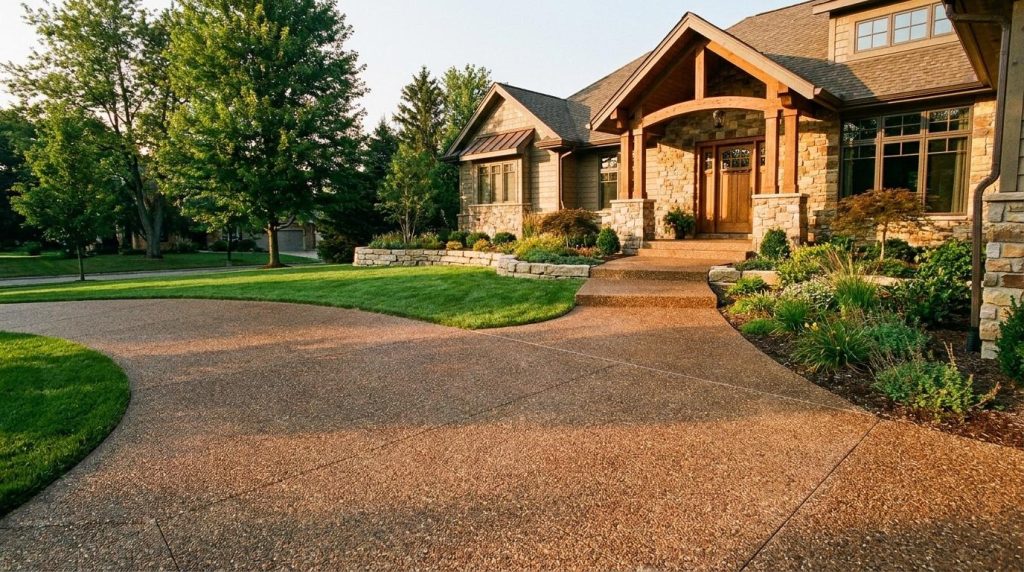
Both systems use natural stone aggregate. Both look premium on installation day. The difference shows up at year three, when the epoxy binder in Nature Stone starts to yellow and break down while LuxuryStone’s polyurethane binder keeps holding the surface together. If you’re putting a stone finish on a pool deck, patio, or driveway in Cleveland, the binder you choose now decides what that surface looks like five summers from now.
Call Cleveland Concrete Coatings at (216) 280-9477 or contact us for a free on-site evaluation. We’ll walk the surface, talk through binder options, and quote a system built for Cleveland’s UV, salt, and freeze-thaw conditions.

Benjamin & Andrew Smola are the owners of Cleveland Concrete Coatings, a concrete coating company based in Cleveland. With a hands-on approach and local expertise, Benjamin, Andrew, and their team are dedicated to delivering durable, high-quality flooring solutions for homes and businesses throughout the area.