
You’ve probably heard the term “polyurea” tossed around while researching garage floor coatings or basement waterproofing. Maybe a contractor mentioned it, or you stumbled across it while comparing options online. But what actually is a polyurea coating, and why is it getting so much attention?
Let’s cut through the jargon and give you a clear picture of what polyurea is, how it works, and why it’s quickly becoming the go-to choice for homeowners and businesses across Cleveland.
Polyurea 101: What It Is and How It Works
Polyurea is a type of elastomer coating formed by a chemical reaction between an isocyanate and an amine-terminated resin. In plain English? It creates an incredibly tough, flexible, and fast-curing protective layer that bonds directly to concrete.
Unlike paint or basic sealers that sit on top of a surface, polyurea penetrates and locks into the concrete’s pores. Once cured, it forms a seamless barrier that’s resistant to just about everything Cleveland can throw at it: road salt, oil, water, UV rays, temperature swings, and heavy impact.
The “polyaspartic” coatings you might also see mentioned are actually a subset of the polyurea family. They share the same core chemistry but cure even faster, making them ideal for one-day installations on residential and commercial projects. For a deeper dive into the science, check out our guide on what polyurea polyaspartic concrete floor coating is and how it’s made.
Why Polyurea Outperforms the Competition
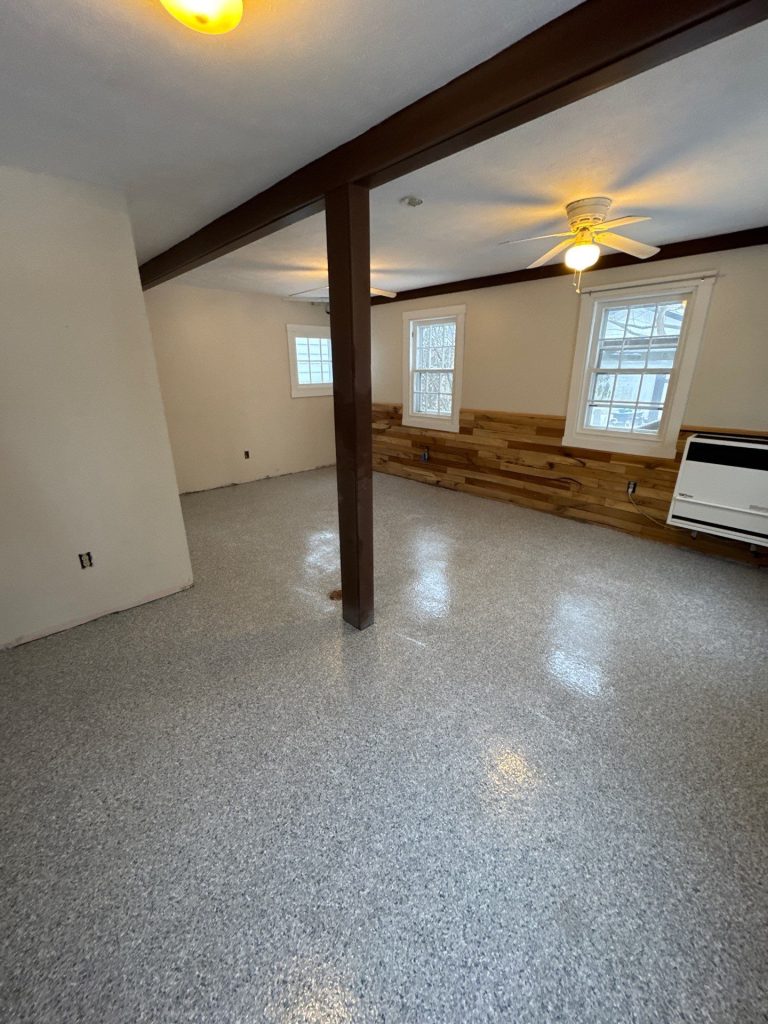
There’s a reason professionals in the concrete industry call polyurea the king of coatings. Here’s what sets it apart:
4x stronger than epoxy. Polyurea’s molecular structure gives it dramatically higher tensile strength and flexibility. It doesn’t just resist damage, it absorbs and distributes impact without cracking or chipping.
Cures in hours, not days. A typical polyurea floor is walkable in 4 to 6 hours and fully drivable in 24 hours. Epoxy? You could be waiting a full week before you can park on it.
UV stable. Epoxy floors are notorious for yellowing in sunlight. Polyurea retains its color and clarity for years, even in spaces with direct sunlight or bright overhead lighting.
Moisture resistant. Cleveland basements and garages deal with serious humidity and moisture migration through concrete slabs. Polyurea creates a waterproof barrier that protects against moisture damage in ways polished concrete and epoxy simply can’t.
Chemical and stain-proof. Oil, gasoline, brake fluid, road salt, and household cleaners. Polyurea handles all of it without staining or degrading.
Flexible yet hard. This sounds contradictory, but it’s one of polyurea’s best features. It’s hard enough to resist scratches and abrasion, but flexible enough to move with your concrete through seasonal expansion and contraction without cracking.
Polyurea vs. Epoxy vs. Polished Concrete

Most homeowners end up comparing these three options, so here’s an honest side-by-side:
| Feature | Polyurea | Epoxy | Polished Concrete |
|---|---|---|---|
| Durability | 4x stronger | Standard | Moderate |
| Lifespan | 15–20+ years | 5–10 years | 5–10 years |
| Cure time | 1 day | 5–7 days | 2–5 days |
| UV resistance | Yes | No (yellows) | N/A |
| Moisture protection | Full | Limited | None |
| Chemical resistance | Excellent | Moderate | Low |
| Flexibility | High | Rigid (cracks) | None |
If you want the full breakdown with cost comparisons, our article on which is better, epoxy or polyurea covers every angle. And if you’re curious about how long you can expect polyurea to last, we’ve written specifically about polyurea’s lifespan and durability.
Where Polyurea Works Best
One of the things that makes polyurea so versatile is that it performs in almost any environment:
- Garage floors: The most popular application. Handles hot tires, road salt, oil drips, and heavy foot traffic without flinching.
- Basements: Moisture resistance makes it the ideal solution for below-grade spaces in Cleveland’s climate.
- Patios and pool decks: UV stability and slip-resistant options make it perfect for outdoor living spaces.
- Commercial and industrial spaces: Warehouses, showrooms, kitchens, and retail floors all benefit from polyurea’s fast cure time and heavy-duty performance.
So, Is Polyurea Worth the Investment?
Polyurea coatings typically cost between $6 and $10 per square foot, which is higher than basic epoxy or polished concrete upfront. But when you factor in the 15-to-20-year lifespan, zero maintenance beyond sweeping and mopping, and the protection it provides your concrete, the math works out in your favor. Our polyurea cost breakdown has all the details.
At Cleveland Concrete Coatings, we install only polyurea and polyaspartic because when you have the best product available, there’s no reason to offer anything less.
Want to see what polyurea can do for your space?
Contact us today for a free consultation and estimate. We’ll help you pick the right finish, color, and application for your project.