
Epoxy floor yellowing happens when ultraviolet light breaks down the resin’s chemical structure, turning whites and light grays into a dull amber tone within one to three years. Cleaning won’t reverse it. Cleveland Concrete Coatings helps Northeast Ohio homeowners avoid this problem with UV-stable polyurea polyaspartic coatings.
Most homeowners assume yellowing means they bought a defective batch. The real issue is chemistry: standard epoxy lacks UV inhibitors, so any light exposure triggers a permanent color shift. That distinction changes how you shop for your next garage floor.
What Causes Epoxy Floor Yellowing
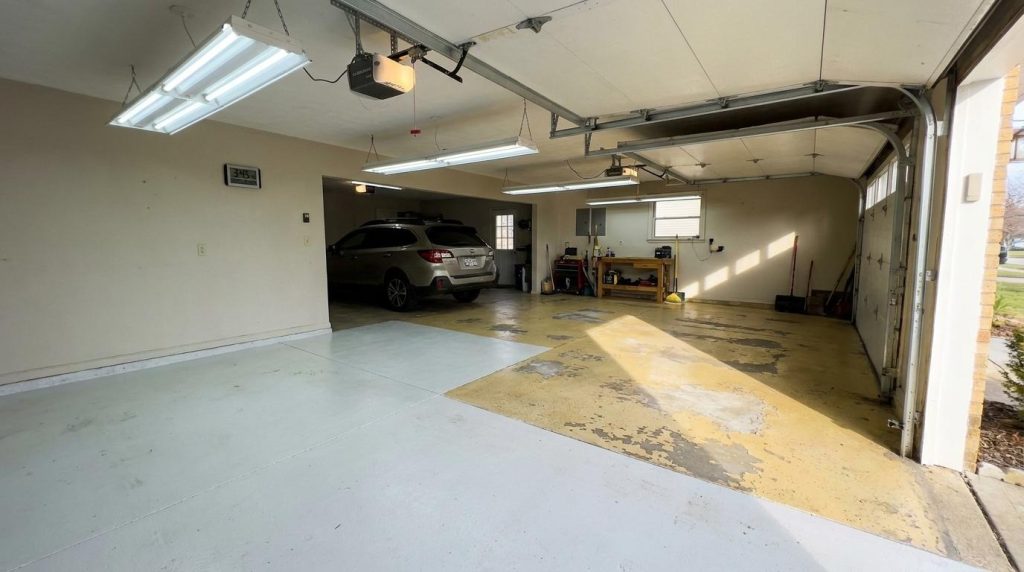
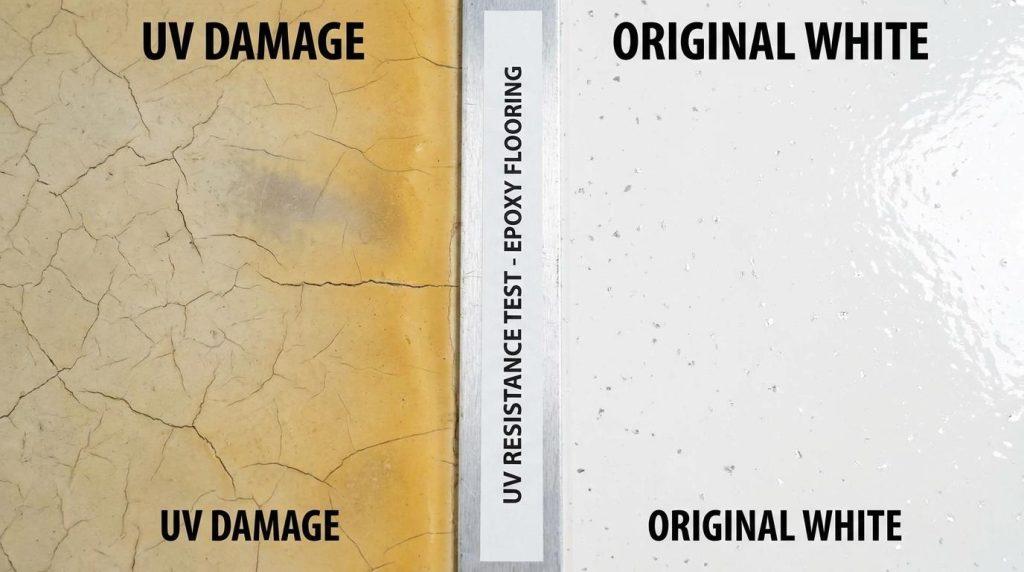
Epoxy is a thermoset polymer, meaning once cured, its molecular chains lock permanently in place. When UV photons hit those chains, they break carbon-nitrogen bonds in the resin. This produces chromophores that absorb certain wavelengths of visible light and reflect yellow tones back. The process starts the moment the coating cures and never stops.
Three factors speed up yellowing in Cleveland garages:
- Direct sunlight through open garage doors. Even a few hours of daily summer exposure accelerates the reaction.
- Bright overhead lighting. Fluorescent and LED fixtures produce less UV than sunlight, but constant exposure adds up over months.
- Light-colored finishes. White, cream, and light gray epoxy shows yellowing fastest because the contrast is more visible.
Once those bonds break, no topcoat or polish brings the original color back. This is one of the most frustrating epoxy flooring problems homeowners face after installation.
Why Cleveland Garages Are Especially Vulnerable
Ohio’s seasonal swings make the problem worse than in many other regions. Garages face long summer days with doors open for hours, flooding the floor with direct UV. In winter, homeowners add bright overhead lighting to compensate for shorter days, creating a secondary UV source most people overlook.
Humidity compounds the issue. Cleveland averages above 70% relative humidity in summer months. Moisture accelerates the oxidation process that drives yellowing, which is why epoxy floors in Painesville and Mentor basements show discoloration faster than well-ventilated garages. Road salt tracked in from winter driving leaves chemical residue that speeds breakdown further.
If your epoxy is already showing yellowing, peeling, or hot tire marks, the coating’s chemistry is working against Cleveland’s conditions. Even garages with the door closed most of the time aren’t immune once interior lighting and seasonal moisture take effect.
How To Prevent Yellowing on Concrete Floors
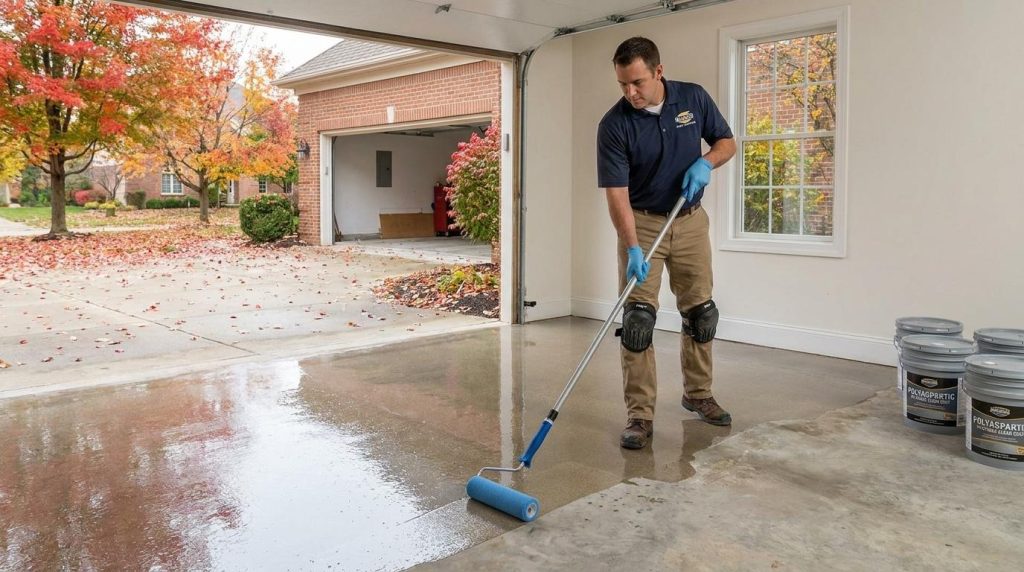
The only reliable prevention is choosing a coating chemistry that doesn’t react to UV. Polyurea polyaspartic coatings are UV-stable because they use an aliphatic isocyanate backbone instead of the aromatic structure found in standard epoxy. That molecular difference prevents the photochemical breakdown that causes yellowing.
Why the UV Topcoat Workaround Falls Short
Some contractors apply a polyurethane topcoat over epoxy to block UV. It works temporarily, but that topcoat wears through and needs reapplication every two to three years. You’re paying for ongoing maintenance to protect a coating that shouldn’t need protecting. Over a decade, that maintenance cost often exceeds what a UV-stable coating would have cost upfront.
What a UV-Stable System Looks Like
Cleveland Concrete Coatings installs a polyurea polyaspartic garage floor system that’s 4x stronger than epoxy and won’t yellow under UV exposure. The installation takes one day with zero VOC fumes, and the coating is backed by a 15-year warranty against peeling. The performance gap between polyurea and epoxy extends well beyond UV resistance alone.
Frequently Asked Questions
Can you fix yellowed epoxy without replacing the entire floor?
No. Yellowing is a permanent chemical change in the epoxy resin. Polishing, recoating, or applying a tinted topcoat won’t restore the original color. The only lasting fix is removing the epoxy down to bare concrete and applying a UV-stable coating like the polyurea polyaspartic system from Cleveland Concrete Coatings.
Does metallic epoxy yellow faster than standard epoxy?
Metallic epoxy uses the same base resin chemistry, so it yellows at the same rate under UV exposure. The visual effect is often more noticeable on metallic finishes because pearlescent pigments shift appearance as the surrounding resin ambers, making discoloration harder to ignore.
Does yellowing affect the coating’s durability or just its appearance?
Yellowing signals active UV degradation throughout the coating, not just surface discoloration. As chemical bonds continue breaking, the epoxy becomes more brittle and prone to cracking, peeling, and hot tire pickup. Addressing yellowing early prevents larger structural failures in the coating down the road.
Your Garage Floor Doesn’t Have to Turn Yellow
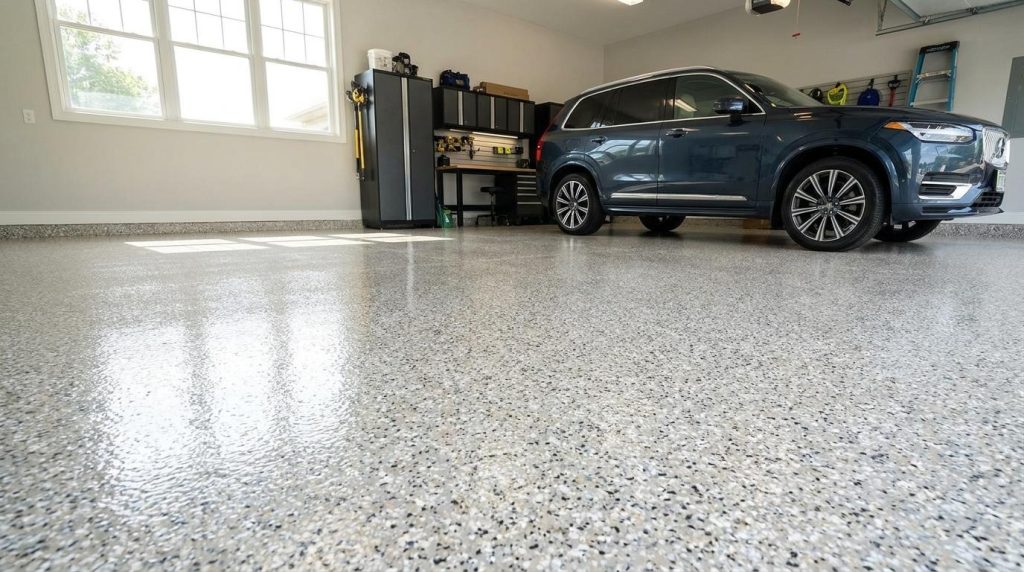
Yellowing isn’t a maintenance failure. It’s a material limitation built into every standard epoxy formula. The real choice is between a floor that looks great on installation day and one that still looks the same in year five. For Cleveland homeowners dealing with UV exposure, humidity, and seasonal temperature swings year-round, polyurea polyaspartic is the coating engineered to handle all three without fading.
Cleveland Concrete Coatings installs it in a single day with zero VOC fumes and no disruption to your household. Contact us today or call (216) 280-9477 to schedule a free estimate.e quote from Cleveland Concrete Coatings and find out what the right system costs for your specific project.

Benjamin & Andrew Smola are the owners of Cleveland Concrete Coatings, a concrete coating company based in Cleveland. With a hands-on approach and local expertise, Benjamin, Andrew, and their team are dedicated to delivering durable, high-quality flooring solutions for homes and businesses throughout the area.