
Between garage floor epoxy and paint, epoxy lasts longer—three to five years versus one to two for paint. But in a Cleveland garage, the honest answer is that neither holds up well. Paint costs under $1.50 per square foot and peels within two winters as freeze-thaw movement and road salt break its surface film apart. Epoxy costs $3 to $7 per square foot and bonds better, but it yellows in sunlight, cracks as the slab shifts, and pulls up under hot tires within five years. Both fail for the same reason: neither was built for Ohio’s temperature swings, UV, and salt.
That’s why the real comparison is a three-way one. Polyurea polyaspartic coatings cost more upfront ($5 to $9 per square foot) but last 15 years or more and handle the salt, hot tires, and freeze-thaw that take the other two apart, giving them the lowest cost per year of the three. Cleveland Concrete Coatings installs polyurea garage floors across Greater Cleveland in a single day. Keep reading to see how paint, epoxy, and polyurea compare on cost, cure time, and how each survives a Cleveland winter.
Garage Floor Paint: What It Is and Where It Fails

Garage floor paint is a single-component latex or acrylic product that sits on top of the concrete surface. It goes on easily with a roller, dries in a few hours, and costs $0.50 to $1.50 per square foot for materials. For a standard two-car garage of 400 to 500 square feet, a DIY paint job runs $200 to $750 including supplies.
Why Paint Fails in Cleveland Garages
Paint doesn’t chemically bond to concrete. It forms a film on the surface that peels under mechanical stress. Cleveland’s freeze-thaw cycles expand and contract the slab beneath the paint, breaking the film apart from the edges inward. Road salt tracked in from November through March sits on the surface and accelerates the breakdown. Hot tires soften painted surfaces on contact and pull the coating off when the car moves. Most painted garage floors in Cleveland show visible peeling and bare spots within one to two winters.
Epoxy Garage Floor Coatings: Better But Still Limited
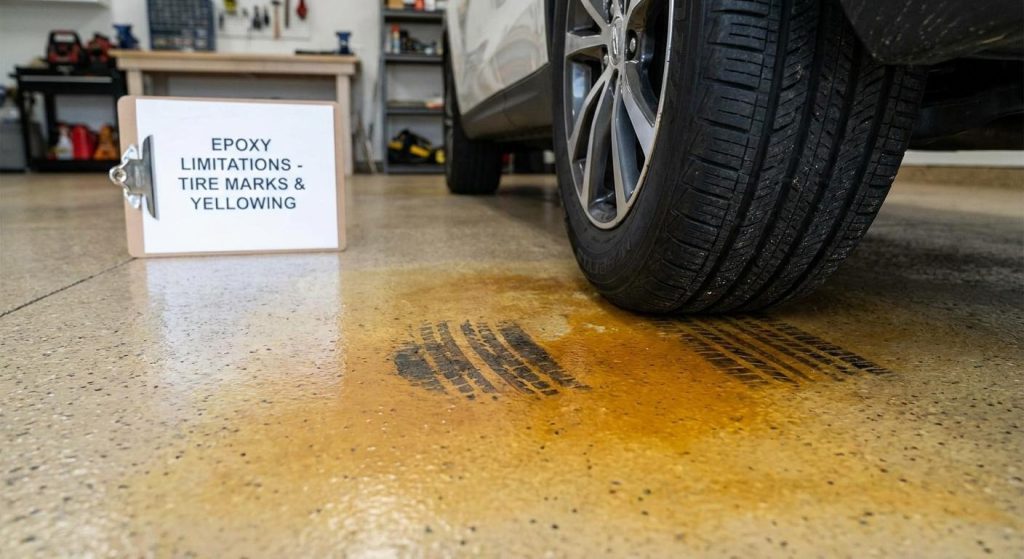
Two-part epoxy systems bond to concrete through a chemical reaction rather than sitting on the surface like paint. That stronger bond translates to better durability. Epoxy resists light foot traffic, minor chemical spills, and casual use for three to five years in a climate-controlled environment. Professional epoxy installation costs $3 to $7 per square foot, while DIY kits run $2 to $4 per square foot. DIY kits skip the diamond grinding that professional installations require, and that single shortcut accounts for most early failures.
Where Epoxy Falls Short in Ohio
Epoxy is a rigid thermoset that cannot flex with the slab as temperatures swing from below zero to above 90°F across a Cleveland year. That rigidity leads to cracking and delamination at joints and edges. Epoxy is not UV stable, so the coating yellows within six to twelve months of sunlight exposure through the garage door. Hot tire pickup is another persistent issue. Tires that reach 150°F after highway driving soften the epoxy surface and pull the coating off on contact. The coating also requires three to seven days of cure time, leaving the garage unusable for nearly a week.
Polyurea Polyaspartic: The Third Option That Outperforms Both

Polyurea polyaspartic coatings solve every failure point that eliminates paint and limits epoxy. The material is four times stronger than epoxy, flexible enough to move with freeze-thaw cycles, UV stable so it will not yellow, and tough enough that hot tire contact won’t soften the coating or pull it off. Professional installation costs $5 to $9 per square foot, which is higher upfront than paint or epoxy, but the 15-year lifespan makes it the lowest cost per year of any option. Among all garage floor coating options in Cleveland, polyurea is the only system that handles UV, salt, and hot tires simultaneously.
One-Day Installation and Same-Week Use
Cleveland Concrete Coatings completes polyurea polyaspartic installations in a single day. Diamond grinding prepares the surface in the morning, the coating system goes down the same day, and the floor is walkable within 24 hours. Vehicle traffic can return in 48 hours. Compare that to epoxy’s three-to-seven-day cure window or the annual repainting cycle that paint demands, and the time savings compound over the life of the coating.
Side-by-Side Comparison: Paint vs Epoxy vs Polyurea
Here is how the three options stack up across the metrics that matter most in a Cleveland garage. Cost per square foot, lifespan, chemical resistance, UV stability, hot tire resistance, and cure time all favor polyurea polyaspartic as the long-term value leader. Performance and price vary across garage floor coating types, and the differences matter most in a Cleveland garage where every coating weakness surfaces by year two.
Frequently Asked Questions
Is it better to paint or epoxy a garage floor?
Epoxy outperforms paint on every durability metric. Paint peels within one to two winters in Cleveland, while epoxy lasts three to five years with proper installation. However, polyurea polyaspartic coatings outperform both options with a 15-year lifespan, UV stability, and resistance to hot tires and road salt that neither paint nor epoxy can match.
What are the drawbacks of garage floor epoxy?
The main drawbacks of garage floor epoxy in Cleveland are UV yellowing, hot tire pickup, long cure time of three to seven days, and cracking from freeze-thaw cycles. Epoxy is also temperature-sensitive during application. It cannot be applied below 50°F, which eliminates most of Cleveland’s October through April calendar.
How long does epoxy last on a garage floor vs paint?
Garage floor paint lasts one to two years in a Cleveland garage before peeling and showing bare spots. Epoxy lasts three to five years before yellowing, hot tire damage, and delamination become significant. Polyurea polyaspartic coatings last 15 or more years under the same conditions, making them the most durable option by a wide margin.
Choose the Finish That Outlasts Cleveland Winters
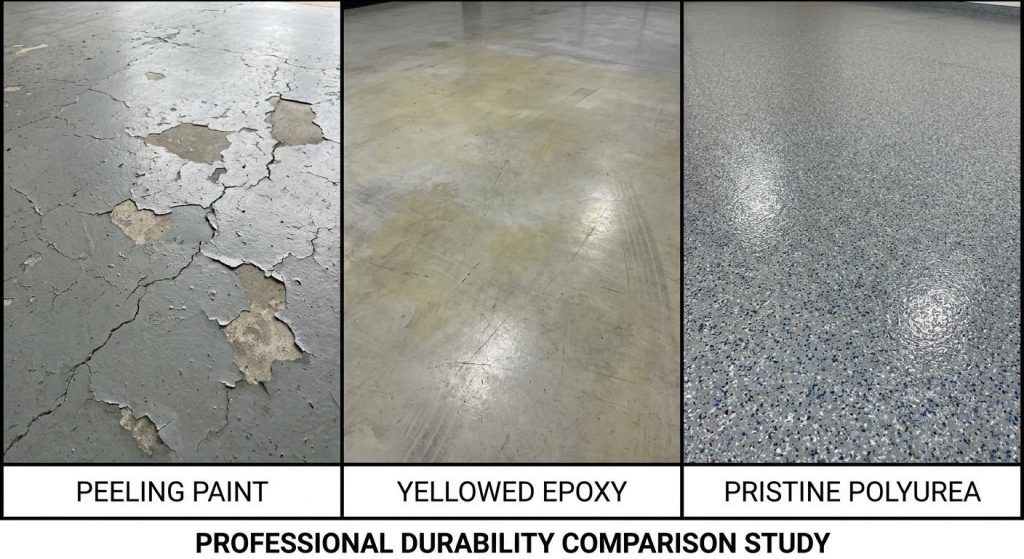
Paint and epoxy both fail the same test: a Cleveland winter. Paint peels from salt and freeze-thaw stress within two seasons. Epoxy holds longer but yellows, cracks, and pulls away under hot tires and UV exposure within five years. Neither coating was engineered for the conditions inside a Northeast Ohio garage.
Polyurea polyaspartic coatings were built for exactly this environment. One-day installation, zero VOC emissions, and a 15-year warranty make the switch straightforward. Cleveland Concrete Coatings has installed polyurea polyaspartic floors in garages across Mentor, Parma, Solon, and Greater Cleveland. Every installation is backed by the same warranty and the same professional surface preparation.
Request your free garage floor quote by calling (216) 280-9477.

Benjamin & Andrew Smola are the owners of Cleveland Concrete Coatings, a concrete coating company based in Cleveland. With a hands-on approach and local expertise, Benjamin, Andrew, and their team are dedicated to delivering durable, high-quality flooring solutions for homes and businesses throughout the area.