
In the current era of all things DIY, it would seem like there’s no renovation project you can’t handle if you arm yourself with a quick Google search and a trip to Home Depot. But while it’s true you can apply your own concrete coating to your garage floor, basement, kitchen, or patio, that doesn’t mean you should.
Concrete coatings such as epoxy, polyurea, and polyaspartic coatings are complicated. If you want them to look good and last long, they require intricate equipment, a specific humidity level, the right temperature, and much more. So, if you’re wondering, ‘Should I coat my concrete floor by myself?’ Read on to learn why applying concrete coatings should be left to the professionals.
Why You Shouldn’t DIY Garage Flooring or Other Concrete Surfaces
Incomplete Surface Prep
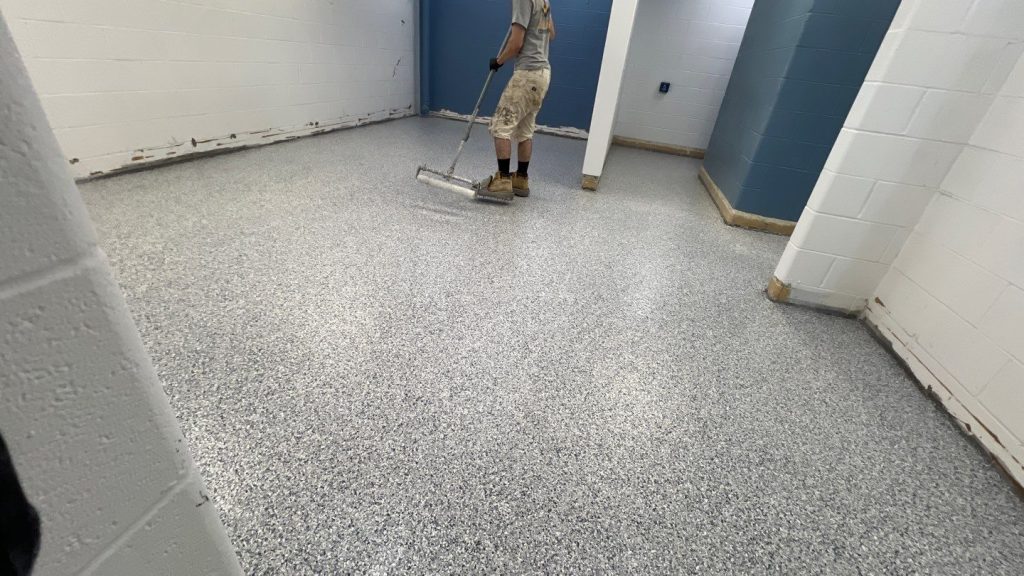
One of the first (and most critical) steps of applying a concrete coating is prepping the floor. First, the concrete slab needs to be cleaned and swept of any dust and debris, and then come the harder-to-fix problems. Concrete floors hold onto grease and oil stains that will need to be removed before application.
Blemishes, such as pitting, spalling, and cracks, also need to be smoothed away in order to ensure evenness throughout. This is typically done with some sort of concrete grinder that uses fine-grit sanding discs to grind away any imperfections until the surface of the concrete is leveled and unsullied.
Acid etching may be another option for preparation, but it requires careful handling and the use of proper safety equipment, including a respirator. The porosity of the substrate must be carefully evaluated to ensure proper adhesion. Failing to do this correctly will mean the project is doomed to fail—an improperly prepped surface means the epoxy coating or other concrete floor coatings are less likely to adhere properly.
Incorrect Humidity & Temperature
Applying a concrete coating is a lot like baking—if the temperature or humidity is off, things can quickly take a turn for the worse. In order for the coating to cure properly, the area where the concrete is located should have low levels of humidity and moderate temperatures.
Moisture can cause the coating to not bond properly, as can overly hot or cold temperatures. Water and waterproofing issues are major concerns when dealing with basement floors or any concrete slab that might be exposed to moisture. Unfortunately, these aren’t things we can determine just by guessing—you’ll have to either find a way to measure them yourself or wait and see how it turns out.
Otherwise, a concrete coating professional will be able to tell you if the humidity levels or temperature are at an appropriate level for concrete coating application and recommend the appropriate primer and sealer for your specific conditions.
Lack of Equipment
Although a boxed DIY concrete coating kit from the store may claim to contain everything you need, it will likely fall short. You’ll still need things like a brush, squeegee, rollers, extension poles, cleaners, degreasers, sealants, and a patch kit (to name just a few).
For decorative concrete options, you’ll need decorative chips and specialized tools. Proper application requires specific tools that professionals have on hand, including the right type of paint, solvent, and concrete sealer. There’s a lot to keep track of, and the last thing you want to do is be halfway through coating your garage floor or driveway before you realize that you’re missing something important.
A professional concrete coating company will have all the supplies they need (plus backups), ensuring a smooth and timely project finish regardless of whether it’s for a warehouse floor, countertop, or residential garage floor coating.
Big Time Commitment
Depending on the size of your floor, a concrete coating can be a long, time-intensive process that isn’t easy to step away from. The cleaning and prep, as we mentioned earlier, is just one piece of the puzzle. After prepping comes the application, and then, most importantly, the curing time.
Giving the coating enough time to cure properly is essential to ensure its long-term effectiveness and durability. You can expect to spend a whole weekend (if not more) finishing your concrete coating project. For some, this time investment can be too much, and they may realize halfway through that they don’t have the bandwidth to do it all on their own, whether it’s a garage, kitchen space, or basement floor.
Consequences of DIY Garage Flooring and Other Concrete Coatings

If you do end up going forward with a do-it-yourself concrete coating project, it’s important to be aware of some problems that may arise as a result of improper application:
Looks Visually Unappealing
Bubbling, warping, peeling, cracking, and discoloration are all problems that can occur as a result of improper application. Stain might not adhere evenly, leaving patchy areas. You’ll have to either live with the unsightly appearance or replace it down the line, especially frustrating for highly visible areas like a patio or kitchen floor.
Doesn’t Last
If a concrete coating is installed incorrectly, then its durability and longevity have likely been compromised. It will deteriorate at a faster rate, making your floor more susceptible to damage caused by wear and tear. While professional epoxy floors and polished concrete surfaces can last for years, DIY applications often fail prematurely, negating any warranty that might have come with the products.
Ends Up Being More Expensive
Incorrectly installed concrete coatings will require costly repairs and patching, or, in some cases, the entire thing will have to be replaced. You’ll end up spending double the money it costs to install. Different types of concrete require different approaches, and using the wrong products for your substrate can lead to adhesion problems and complete failure.
Professional Concrete Coating Options
When considering professional installation, you have several options for your concrete surfaces:
- Epoxy Flooring: Durable and available in various colors and finishes
- Polyaspartic Coatings: Fast-curing and extremely durable
- Polyurea Coatings: Flexible and resistant to chemicals
- Decorative Concrete: Including flake systems with decorative chips for a customized look
- Polished Concrete: For a sleek, modern appearance
Each of these options has its own advantages and can be tailored to specific needs, whether for a garage floor coating, basement waterproofing, or commercial warehouse application.
Contact Us Today
If you’re interested in saving yourself time, money, and stress, then contact us today to receive a free quote for a concrete coating. While we understand the appeal of a DIY project, we can also assure you that in order to properly safeguard your floor, you’ll want to leave this sort of job to the professionals.
Our dedicated team of industry experts utilizes years of practice and premier products to produce high-quality flooring projects every time. From garage floor coatings to basement floors and kitchen spaces to commercial applications, we have the expertise to ensure your concrete floor coating will provide the durability and appearance you desire.
Don’t risk your concrete investment with a DIY approach that might lead to disappointing results. Let our professionals handle your concrete coating needs and provide a solution that will truly stand the test of time.

Benjamin & Andrew Smola are the owners of Cleveland Concrete Coatings, a concrete coating company based in Cleveland. With a hands-on approach and local expertise, Benjamin, Andrew, and their team are dedicated to delivering durable, high-quality flooring solutions for homes and businesses throughout the area.